
Caring for Linen and Ramie Summer Clothing: The Bast-Fiber Protocol That Keeps the Drape and the Cool
Linen and ramie are the bast fibers that breathe in the summer heat and shrink in the hot wash. A cool wash, a reshape while damp, a press while damp, and a breathable storage keep the drape and the cool for years of summers.

Elena Rostova
Sustainability Chemist
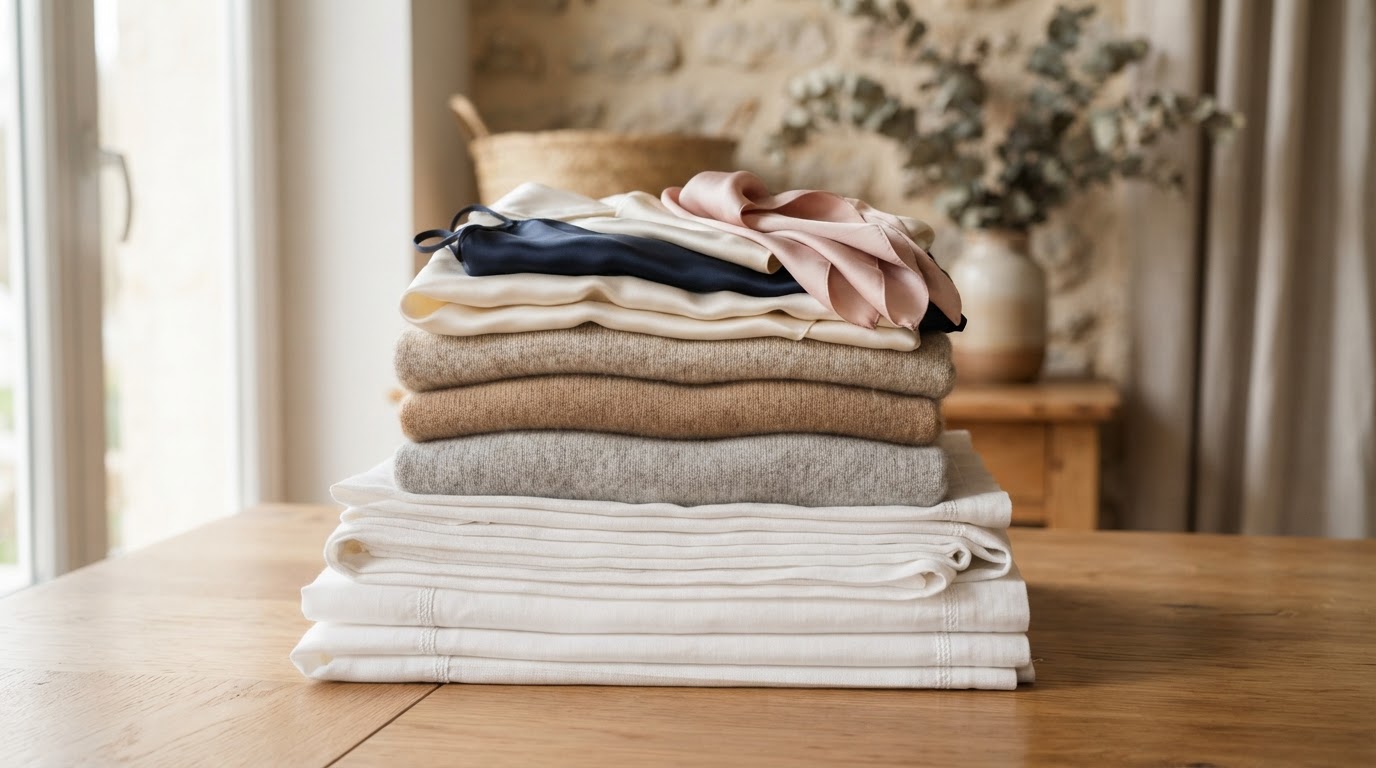
Caring for Linen and Ramie Summer Clothing: The Bast-Fiber Protocol That Keeps the Drape and the Cool
Linen and ramie are the summer fibers most people ruin in the first wash, because the two properties that make them the ideal hot-weather cloth — the crisp drape, the open weave, the wicking absorbency — are the same properties that make them vulnerable to the hot wash and the hot dryer that a cotton summer shirt tolerates. Linen and ramie are bast fibers, drawn from the stalk of the flax and the nettle, and the bast fiber is strong when it is dry and vulnerable when it is wet: it shrinks under the heat that a cotton takes, it weakens under the agitation that a cotton shrugs off, and it roughens under the detergent that a cotton tolerates. The garment that lasts a decade of summers is the one washed cool, reshaped while damp, pressed while damp, and stored breathable; the one that lasts a season is the one run through a hot wash and a hot dryer, which shrinks it a size, bakes the wrinkles into the drape, and roughens the surface to the dull hand the bast fiber takes when it is abused. The protocol respects the bast fiber, and it is the one that keeps the drape and the cool for the years of summers the garment was bought for.
For linen and ramie summer clothing you would rather have professionally cleaned and pressed, our Greensboro Market St drop-off team handles bast-fiber garments, or browse all four Royal Clean Locations.
Why a Bast Fiber Is a Different Care
A bast fiber is the structural fiber of a plant stalk, and the properties that make it the ideal summer cloth are the properties that make it the careful wash. The fiber is long and strong, which gives the linen its crisp drape and its years of life; it is hollow, which gives the linen its wicking absorbency and its breathability — the air the hollow fiber holds is the cool the linen wears in the heat. The same hollow structure is the vulnerability: the fiber crushes under a hot dryer's tumbling and it shrinks under the hot water that a cotton shrugs off, and the crush and the shrink are the drape and the fit the garment loses in the first wrong wash. The protocol that respects the bast is the cool, gentle, reshape-and-press protocol; the protocol that treats it as a cotton is the one that ruins it.
The Wash Protocol
The Reshape and the Press — the Key Steps
The two steps that make a linen garment look right are the reshape while damp and the press while damp, and they are the ones most people skip for the dryer. The reshape: pull the damp garment back to its dimensions — smooth the seams, straighten the hem, ease the shoulders — because the bast dries into the shape it is left in, and a garment smoothed flat dries smooth while a crumpled one dries wrinkled. The press: iron the garment while it is still slightly damp, on a medium-to-high setting, from the wrong side or through a press cloth, with steam. The damp press relaxes the fiber and lifts the wrinkle without the heat-set crease a dry, hot iron makes. A linen pressed while damp comes out crisp; one pressed dry comes out shiny and creased.
The Stain Protocol — Treat by Chemistry
A linen garment's stains are the summer's — the sweat, the sunscreen, the wine, the coffee — and each has a chemistry. The sweat is the body-oil-and-salt stain that an enzyme pretreat lifts; the sunscreen is the oil-and-mineral stain that dish detergent lifts cold (never hot — it bakes the oil in); the wine is the tannin stain that a cold flush and an oxygen bleach lift (never hot — it sets the tannin); the coffee is the same tannin chemistry. Pretreat the stain within the day and it lifts; leave it and it sets, the same way it does on any fiber. See our stain guides for the chemistry by stain.
The Storage — Breathable, Not Plastic
The storage matters as much as the wash, and the bast fiber is the one most damaged by the wrong storage. Plastic bins and vacuum bags trap the residual moisture and grow mildew in a humid Piedmont summer; dry-cleaner plastic breaks down and yellows the fiber. The right storage is breathable: a cotton garment bag, an acid-free box, or a cedar chest, in a dry, dark, temperature-stable closet. Hang the structured garments on a padded hanger; fold the soft ones along the existing creases, refolded occasionally so the fold does not set a permanent weakness. A cedar block repels the moths that feed on the linen blends and keeps the closet fresh.
Frequently Asked Questions
Can I wash linen in hot water?
No — hot shrinks a linen 5 to 10 percent in the first wash, and the shrink does not come back. Cool water, gentle cycle, is the protocol that holds the fit and the drape.
How do I get wrinkles out of linen?
Reshape while damp and press while damp — iron the slightly damp garment from the wrong side or through a press cloth with steam. A dry, hot iron shines and creases the fiber.
Will bleach whiten my linen?
Oxygen bleach, in a light dose, brightens without the damage. Chlorine yellows and weakens the bast fiber faster than it yellows a cotton; avoid it.
Why is my linen going rough and dull?
A heavy detergent, a hot dryer, or the wrong storage. A mild detergent at half dose, a low or air-dry, and a breathable cotton bag or a cedar chest keep the drape and the hand.
How do I store linen for the winter?
Clean it first (the body oil yellows it in storage), dry it fully, and store it breathable — a cotton bag or an acid-free box in a dry, dark closet. Never plastic, which traps the moisture and mildews the fiber.
The Bottom Line on Linen and Ramie
Wash cool and gentle with a mild detergent, no softener, no chlorine, reshape while damp, press while damp, and store breathable. Follow that and a bast-fiber garment keeps its drape and its cool for years of summers — and for the pieces you'd rather hand off, our Drop Off Wash & Fold teams across Greensboro, Winston-Salem, and Burlington handle bast-fiber garments.
Did you find this guide helpful?
Give it a heart to help other readers discover it.
Need Professional Drop-Off Wash & Fold in Winston-Salem?
Bring your delicates, bulky comforters, or commercial linens to 658 S Stratford Rd. Open daily from 5 AM to 11 PM.
Reader Discussion (2)
This guide completely saved my favorite cashmere sweater! I had no idea standard detergent was destroying the fibers.
We visit the Stratford Rd location every weekend for wash & fold. The staff is always so attentive!