
Caring for Linen Tablecloths for Home Entertaining Without the Wrinkles, the Shrink, or the Stain Set
A linen tablecloth is the entertaining piece that rewards the right care. A cool wash, a reshape while damp, a press while damp, and a stain protocol keep the drape and the white for years of dinners.

Elena Rostova
Sustainability Chemist
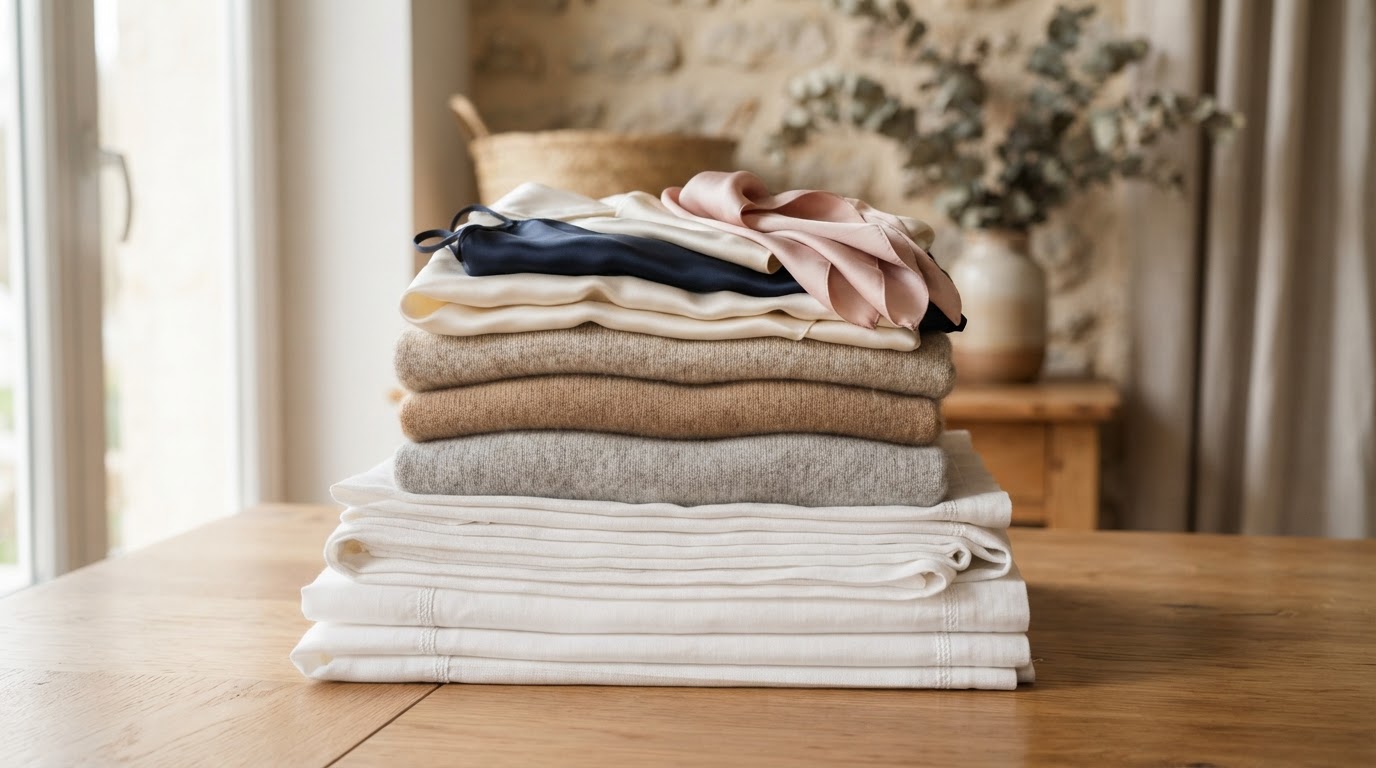
Caring for Linen Tablecloths for Home Entertaining Without the Wrinkles, the Shrink, or the Stain Set
A linen tablecloth is the entertaining piece that most rewards the right care and most punishes the wrong care, because linen is the fiber that wrinkles by nature, shrinks by accident, and stains by the chemistry of the dinner — the wine, the oil, the tannin of the coffee and the sauce — that sets if it is treated wrong. The tablecloth that lasts decades of dinners is the one washed cool, reshaped while damp, pressed while damp, and stain-treated by the chemistry of each spill; the tablecloth that lasts a season is the one run through a hot wash and a hot dryer, which shrinks it a size, bakes the wrinkles into the drape, and sets the wine ring permanently. The protocol respects the fiber — linen is a bast fiber, strong when dry and vulnerable when wet, prone to shrink under heat and to wrinkle under agitation — and it is the one that keeps the tablecloth crisp and white for years of entertaining.
For table linens you would rather have professionally cleaned and pressed, our Greensboro Market St drop-off team handles table linen, or browse all four Royal Clean Locations.
Why Linen Tablecloths Are a Different Care
Linen is a bast fiber from the flax plant, and the properties that make it the ideal tablecloth — the crisp drape, the smooth surface, the lint-free finish, the absorbency that takes a napkin's spill — are the same properties that make it vulnerable. The fiber shrinks under heat (the first hot wash shrinks a tablecloth 5 to 10 percent, and it never comes back); it wrinkles under agitation and under a crush; it weakens when wet, so the wash has to be gentle; and the surface, which is what gives the tablecloth its sheen, roughens under a harsh detergent and a hot dryer. The protocol respects all of it: cool water, gentle agitation, a reshape while damp, and a press while damp. The tablecloth that is cared for this way keeps its drape and its sheen; the one that is hot-washed and hot-dried shrinks, wrinkles, and goes dull.
The Stain Protocol — Treat by Chemistry
A tablecloth's stains are the dinner's, and each has a chemistry the protocol addresses.
Red wine. A tannin-and-anthocyanin stain. Blot (never rub), flush cold from the back, dish detergent for the pigment, oxygen bleach for the tannin. Never hot — heat sets the tannin the way it sets blood. See our wine stain guide for the full protocol.
Food grease and butter. A fat stain. Dish detergent is the right surfactant (it is built for food fat), worked into the spot and let to sit 10 minutes before the wash. Hot water lifts the fat, but the tablecloth's shrink risk means a warm, not hot, wash — the trade-off.
Coffee and tea. A tannin stain. Cold flush first (never hot — it sets the tannin), then an enzyme detergent and an oxygen-bleach booster. The tannin sets fast, so the pre-treat within the meal is the step that saves the tablecloth.
Candle wax. A wax stain, not a grease stain. The protocol: freeze the wax with ice (it hardens and lifts off in a sheet), scrape the excess, then a warm iron over a paper towel to absorb the residual wax, then a detergent wash. Never hot water first — it melts the wax deeper into the fiber.
The set-in stain. For a stain that has been through the dryer or sat overnight, the finisher is an oxygen-bleach soak — a scoop of sodium percarbonate in warm water, the tablecloth submerged for an hour, then a warm wash. Oxygen bleach reverses the oxidation that set the stain; chlorine bleach yellows linen and weakens the fiber.
The Wash Protocol
The Reshape and the Press — the Key Steps
The two steps that make a linen tablecloth look right are the reshape while damp and the press while damp, and they are the ones most people skip. The reshape: pull the damp tablecloth back to its dimensions — smooth the seams, straighten the edges, ease the length — because linen dries into the shape it is left in. A tablecloth dried crumpled dries crumpled; one smoothed flat dries smooth. The press: iron the linen while it is still slightly damp, on a medium-to-high setting, from the wrong side or through a press cloth, with steam. The damp press relaxes the fiber and lifts the wrinkles without the heat-set crease a dry, hot iron makes. A linen tablecloth pressed while damp comes out crisp; one pressed dry comes out shiny and creased.
The Storage — Fold or Roll
Store a linen tablecloth either folded (along the existing creases, refolded occasionally so the fold does not set a permanent weakness) or rolled (around a tube, which avoids the creases altogether). A tablecloth stored on a hanger can stretch under its own weight. Store breathable — in a cotton bag or an acid-free box, never plastic — and in a dry, dark closet. A cedar block in the closet repels the moths that feed on any linen blend and keeps the closet fresh. See our seasonal storage guide for the full protocol.
The Starch Question
For a tablecloth that needs to look crisp for a formal dinner, a light starch spray before the press gives the linen a firmer hand and a crisper drape. Starch is a surface sizing that holds the fiber smooth, and it washes out in the next wash. It is the finisher for the formal table, not the everyday one — a starched tablecloth is slightly stiffer and less absorbent, which is right for a dinner and wrong for a napkin. Use it for the occasion, not the everyday.
Frequently Asked Questions
Can I wash a linen tablecloth in hot water?
No. Hot shrinks linen 5 to 10 percent in the first wash, and the shrink does not come back. Cool water, gentle cycle.
How do I get wrinkles out of a linen tablecloth?
Press while it is still slightly damp, on a medium-to-high setting with steam, from the wrong side or through a press cloth. A dry, hot iron shines and creases the linen.
Will bleach whiten my linen tablecloth?
Oxygen bleach, yes — it brightens without the damage. Chlorine bleach yellows and weakens linen over time; avoid it.
How do I get red wine out of a linen tablecloth?
Blot, flush cold from the back, dish detergent for the pigment, oxygen bleach for the tannin. Never hot — heat sets the tannin. Treat it within the meal.
How do I store a linen tablecloth?
Folded along the existing creases (refolded occasionally) or rolled around a tube, in a cotton bag or an acid-free box, in a dry, dark closet. Never plastic, which traps moisture and mildews the fiber.
The Bottom Line on Linen Tablecloths
Treat the stains by chemistry, wash cool and gentle with a mild detergent, no softener, no chlorine, reshape while damp, press while damp, and store breathable. Follow that and a linen tablecloth keeps its drape and its white for years of entertaining — and for table linens you'd rather hand off, our Drop Off Wash & Fold teams across Greensboro, Winston-Salem, and Burlington handle table linen.
Did you find this guide helpful?
Give it a heart to help other readers discover it.
Need Professional Drop-Off Wash & Fold in Winston-Salem?
Bring your delicates, bulky comforters, or commercial linens to 658 S Stratford Rd. Open daily from 5 AM to 11 PM.
Reader Discussion (2)
This guide completely saved my favorite cashmere sweater! I had no idea standard detergent was destroying the fibers.
We visit the Stratford Rd location every weekend for wash & fold. The staff is always so attentive!