
Hard Water and Summer Mineral Buildup on Towels: The Chelation Protocol That Restores the Soft and the Absorbency
The Triad's hard water deposits a mineral film on towels that the summer's higher wash volume compounds. A washing-soda chelation, a citric-acid rinse, and a monthly strip restore the soft and the absorbency without the softener film.

Elena Rostova
Sustainability Chemist
Hard Water and Summer Mineral Buildup on Towels: The Chelation Protocol That Restores the Soft and the Absorbency
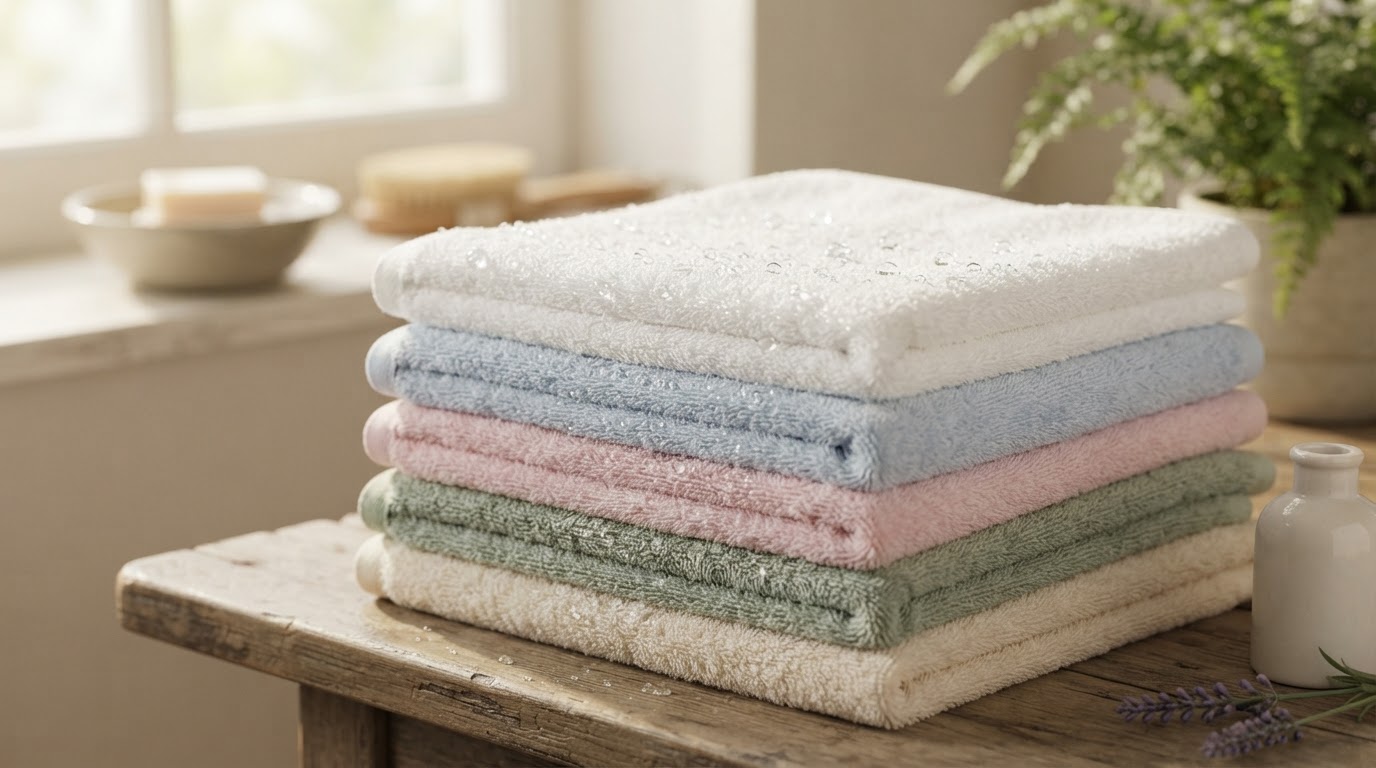
A towel that goes stiff and scratchy over a summer is the towel most people blame on the dryer or the age, and it is almost always the hard water. The North Carolina Triad runs moderately hard water — the calcium and the magnesium that the aquifer picks up — and the mineral deposits on the cotton as a film that the wash does not fully clear, and the film is the stiff hand and the reduced absorbency that the towel loses over the season. The summer compounds it, because the higher wash volume — the pool towels, the beach towels, the extra showers — runs more hard water through the machine and deposits more mineral, and the towel that was soft in June is a stiff board by August. The fix is not the fabric softener, which coats the towel in a film that trades the mineral stiffness for the water-repellency that ruins the absorbency; the fix is the chelation, which sequesters the mineral in the wash so it does not deposit and dissolves the film on the fiber so the towel comes out soft and absorbent. The protocol is the washing-soda chelation, the citric-acid rinse, and the monthly strip, and it is the one that restores the soft without the softener's trade.
For hard-water towel issues you would rather have professionally handled, our Greensboro Market St team runs mineral-chelation cycles, or browse all four Royal Clean Locations.
What the Mineral Film Actually Is
The hard-water mineral is the calcium and the magnesium the water dissolves from the limestone aquifer, and it deposits on the cotton as a carbonate film — the same scale that builds on a showerhead, on the towel. The film does two things: it stiffens the fiber, because the mineral crust binds the cotton threads into a rigid matrix, and it reduces the absorbency, because the water-repellent mineral film sits between the cotton and the water the towel is supposed to hold. The stiff, non-absorbent towel is the mineral-filmed towel, and the soft, absorbent towel is the one the chelation keeps clear of the film. The film also traps the body oil and the detergent residue, which is the reason the hard-water towel yellows faster than the soft-water one — the mineral film holds the oxidizing oil the wash does not fully lift.
The Washing-Soda Chelation
The core of the protocol is the washing-soda chelation, and the chemistry is the sequestration of the mineral. Washing soda — sodium carbonate — in the wash binds the calcium and the magnesium in the water so they do not deposit on the fiber, the same way a water softener does at the whole-house scale. The protocol: a half-cup of washing soda in the wash, with the detergent, for every load of towels. The soda chelates the mineral in the wash water, so the wash lifts the soil instead of depositing the mineral with it, and the towel comes out softer than the wash without the soda. A weekly washing-soda dose keeps the mineral from building back; the wash without it is the wash that deposits the film.
The Citric-Acid Rinse
The citric-acid rinse is the step that dissolves the film already on the fiber, and it is the one the chelation alone does not do. Citric acid is a mild acid that dissolves the calcium and the magnesium carbonate the way a descaler dissolves the showerhead scale, and a half-cup in the rinse (or a dedicated rinse additive) clears the film the wash deposited. The protocol: a half-cup of citric acid (or a cup of white vinegar, which is a milder chelator) in the rinse, every wash, to dissolve the film and to strip the detergent residue. The citric-acid rinse is the step that restores the soft to a towel that has already gone stiff, and the weekly chelation plus the weekly rinse keeps it from building back.
The Monthly Strip
The monthly strip is the reset that clears the deep mineral the weekly chelation and rinse do not fully lift, and it is the one the hard-water towel needs once a season. The protocol: a hot wash with no detergent, a full scoop of washing soda and a half-cup of citric acid (or a dedicated hard-water stripper), a soak of an hour or two, and a hot wash and a double rinse. The strip dissolves the mineral crust the weekly wash has built, and it restores the absorbency the film took — the towel that comes out of the strip is the soft, absorbent towel the mineral had stiffened. A hard-water household that strips monthly keeps the towels soft for years; the one that does not replaces them for the stiffness before the cotton wears.
The No-Softener Rule
The no-softener rule is the part of the protocol that prevents the trade most people make, and the trade is the softener's film for the mineral's film. A fabric softener coats the towel in a silicone film that makes it feel soft — and water-repellent, which is the absorbency the towel is supposed to have. The softener's soft is the soft of a non-absorbent towel, and it is the trade that ruins the towel for the one job it does. The chelation protocol restores the soft without the film, because the soft is the cotton's own hand, cleared of the mineral, not the silicone coating the softener lays over it. Use the vinegar or the citric acid in the rinse, never the softener, and the towel stays soft and absorbent.
Frequently Asked Questions
Why do my towels go stiff and scratchy?
The hard-water mineral — calcium and magnesium — deposits a film on the cotton that stiffens the fiber and reduces the absorbency. A washing-soda chelation in the wash and a citric-acid rinse dissolve the film and restore the soft.
Does fabric softener fix hard-water towels?
It makes them feel soft by coating them in a silicone film — but the film makes them water-repellent, which ruins the absorbency. The chelation protocol restores the soft without the trade.
How do I strip my hard-water towels?
A hot wash with no detergent, a full scoop of washing soda and a half-cup of citric acid, a soak of an hour or two, and a hot wash and a double rinse. Monthly in a hard-water household.
Will vinegar soften my towels?
Yes — a half-cup in the rinse chelates the mineral and strips the residue, which restores the soft. Citric acid is a stronger chelator for a deeper mineral build-up.
Is the Triad's water hard?
Moderately hard. The aquifer picks up calcium and magnesium from the limestone, and the mineral deposits on the cotton over the washes. A weekly washing-soda chelation keeps it from building.
The Bottom Line on Hard-Water Towels
A washing-soda chelation in the wash, a citric-acid or vinegar rinse, a monthly strip for the deep mineral, and no fabric softener. Follow that and a towel stays soft and absorbent in the Triad's hard water — and for the loads you'd rather hand off, our Drop Off Wash & Fold teams across Greensboro, Winston-Salem, and Burlington run mineral-chelation cycles.
Did you find this guide helpful?
Give it a heart to help other readers discover it.
Need Professional Drop-Off Wash & Fold in Winston-Salem?
Bring your delicates, bulky comforters, or commercial linens to 658 S Stratford Rd. Open daily from 5 AM to 11 PM.
Reader Discussion (2)
This guide completely saved my favorite cashmere sweater! I had no idea standard detergent was destroying the fibers.
We visit the Stratford Rd location every weekend for wash & fold. The staff is always so attentive!