
Office Uniform and Branded Apparel Care: The Commercial Guide to the Polos, Polos, and Logo Wear That Represents the Brand
A company's branded apparel is the uniform the customer sees, and the wrong wash fades the logo and shrinks the fit. A cold wash, an inside-out habit, and a low-heat dry keep the logo sharp and the fit true for the staff's tenure.
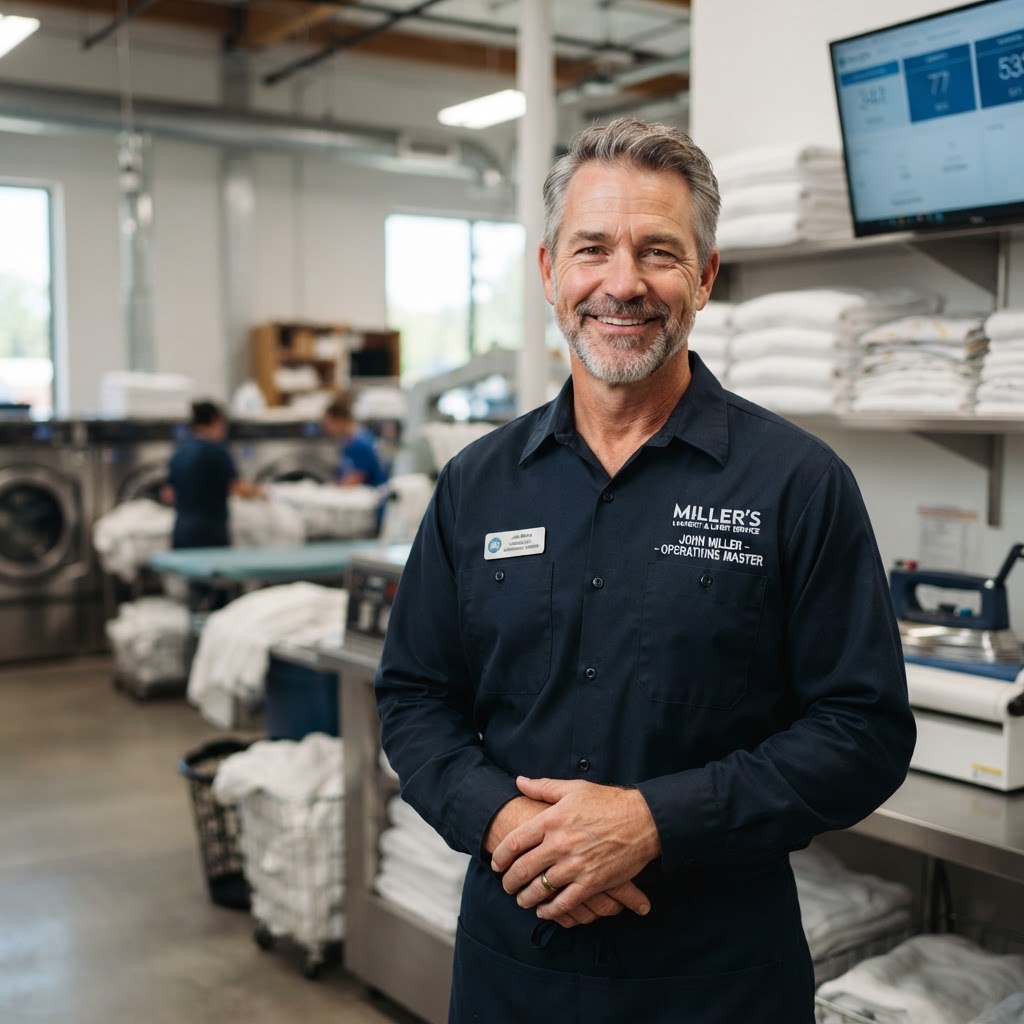
Marcus Vance
Master Cleaner
Office Uniform and Branded Apparel Care: The Commercial Guide to the Polos, Polos, and Logo Wear That Represents the Brand
A company's branded apparel is the uniform the customer sees first and the one the wrong wash fades fastest, because the logo print and the embroidered crest are the elements the hot water and the hot dryer take before the garment itself wears out. The branded polo with the company logo on the chest is the shirt the customer reads as the company's care, and the polo that comes out of a residential hot wash with a cracked logo print and a faded body is the polo the company is represented by at the next customer visit. The uniform program is the one the office runs to keep the branded apparel presentable through the staff's tenure: a cold wash that holds the print and the color, an inside-out habit that protects the logo from the drum's abrasion, a low-heat or air-dry that prevents the shrink and the print-crack, and a par rotation that keeps a clean set in reserve for the days the staff is on. The program is not expensive; it is the discipline most offices skip, and the cost of the skip is the replacement of the branded apparel a season early and the brand represented by the faded logo.
For Triad offices running their own uniform program or weighing a route, our Winston-Salem Northwest Blvd and Greensboro Market St teams run branded apparel programs, or browse all four Royal Clean Locations.
Why Branded Apparel Is a Different Care
A branded polo or a logo fleece is the garment with two elements the standard wash ruins: the print or the embroidery, and the color. The logo print — the screen print, the heat-transfer vinyl, the direct-to-garment ink — is the element the hot water softens and the hot dryer cracks, and the print that survives a hundred cold washes cracks in ten hot ones. The embroidery is more durable but it is the element the high heat shrinks the backing on, and the puckered, shrunken embroidery is the logo that reads as the cheap at the customer's eye. The color is the second element the hot wash fades, the same way it fades a school uniform or a vintage denim, and the branded polo that fades in the body is the polo the logo floats on as the company's color washes out. The protocol respects the print, the embroidery, and the color, and it is the one that keeps the branded apparel presentable for the tenure.
The Wash Protocol
The Dry — Low or Air
The dryer is where the print cracks and the fit shrinks, the same way it happens to a school uniform or a vintage denim. The protocol: the lowest heat the dryer offers, pulled out the moment the garment is dry — not bone-dry, just dry. Over-drying is what shrinks the polo a size and what bakes the print-crack, and the branded polo that goes through a hot dryer is the polo the staff wears a half-size small with a cracked logo. For the longest life, air-dry the polo flat or on a hanger, reshaping the collar and the shoulders while damp, and press it lightly with steam if a crisp look is required. An air-dried polo keeps its print and its fit; a machine-dried one loses both, a little every cycle.
The Par Level for the Staff
The par level is the inventory that keeps the staff in a clean, presentable uniform every workday, and the par that works is five per staff member — one for each workday, with the weekend for the wash. The staff member with one polo wears it daily and washes it nightly, and the polo wears out in a season and the print fades in the daily wash; the staff member with five rotates the week and each polo rests four days between the washes, and the polos last the tenure. The cost of the par is the cost of the polos; the cost of one is the faded, over-washed polo the customer sees. See our commercial laundry page for the par sizing.
The Logo Print vs. the Embroidery
The logo print and the embroidery have different vulnerabilities, and the protocol respects both. The print — the screen print or the heat-transfer — is the element the heat cracks and the abrasion roughens, and the inside-out cold wash and the low-heat dry are the care that protects it. The embroidery is more durable but it is the element the high heat shrinks the backing on, and the puckered embroidery is the logo that reads as the cheap. The print that is peeling at the edges after the first wash was washed hot and outside; the embroidery that is puckered was dried hot. Both are the care the program prevents, and the program that does not is the one the customer reads as the brand's neglect.
Frequently Asked Questions
How do I keep the logo print from cracking on my polos?
Turn them inside-out, wash cold on a gentle cycle, and dry on the lowest heat or air-dry. The print that washes inside-out and cold survives a hundred washes; the print that washes hot and outside cracks in ten.
Will hot water fade my branded apparel?
Yes — the hot water lifts the dye the same way it lifts it from a school uniform. Cold water holds the color; the hot fades the body and leaves the logo floating on the faded ground.
How many uniform polos does a staff member need?
Five — one for each workday, with the weekend for the wash. The staff member with one wears it daily and washes it nightly, and the polo fades in a season; the staff member with five rotates the week and the polos last the tenure.
Can I use fabric softener on my performance polo?
No — the softener's silicone film kills the wick. Use a half-cup of vinegar in the rinse to strip the residue and soften without the film.
Why is my embroidered logo puckering?
The high heat of the dryer shrank the embroidery's backing. Dry on the lowest heat or air-dry, and the embroidery stays flat and reads as the quality.
The Bottom Line on Branded Apparel
Inside-out, cold wash, mild detergent, no softener on the performance fabrics, low-heat or air-dry, and a five-per-staff par. Follow that and the branded apparel keeps its logo and its color for the tenure — and for Triad offices that outsource, our Drop Off Wash & Fold teams across Greensboro, Winston-Salem, and Burlington run branded apparel programs.
Did you find this guide helpful?
Give it a heart to help other readers discover it.
Need Professional Drop-Off Wash & Fold in Winston-Salem?
Bring your delicates, bulky comforters, or commercial linens to 658 S Stratford Rd. Open daily from 5 AM to 11 PM.
Reader Discussion (2)
This guide completely saved my favorite cashmere sweater! I had no idea standard detergent was destroying the fibers.
We visit the Stratford Rd location every weekend for wash & fold. The staff is always so attentive!