
Why Ozone Laundry Sanitizes Clothes and Removes Odors Without Bleach
Ozone wash technology kills 99.9% of bacteria in cold water while extending fabric lifespan and slashing energy use. Here is the chemistry behind why it works — and beats bleach.

Elena Rostova
Sustainability Chemist
Why Ozone Laundry Sanitizes Clothes and Removes Odors Without Bleach
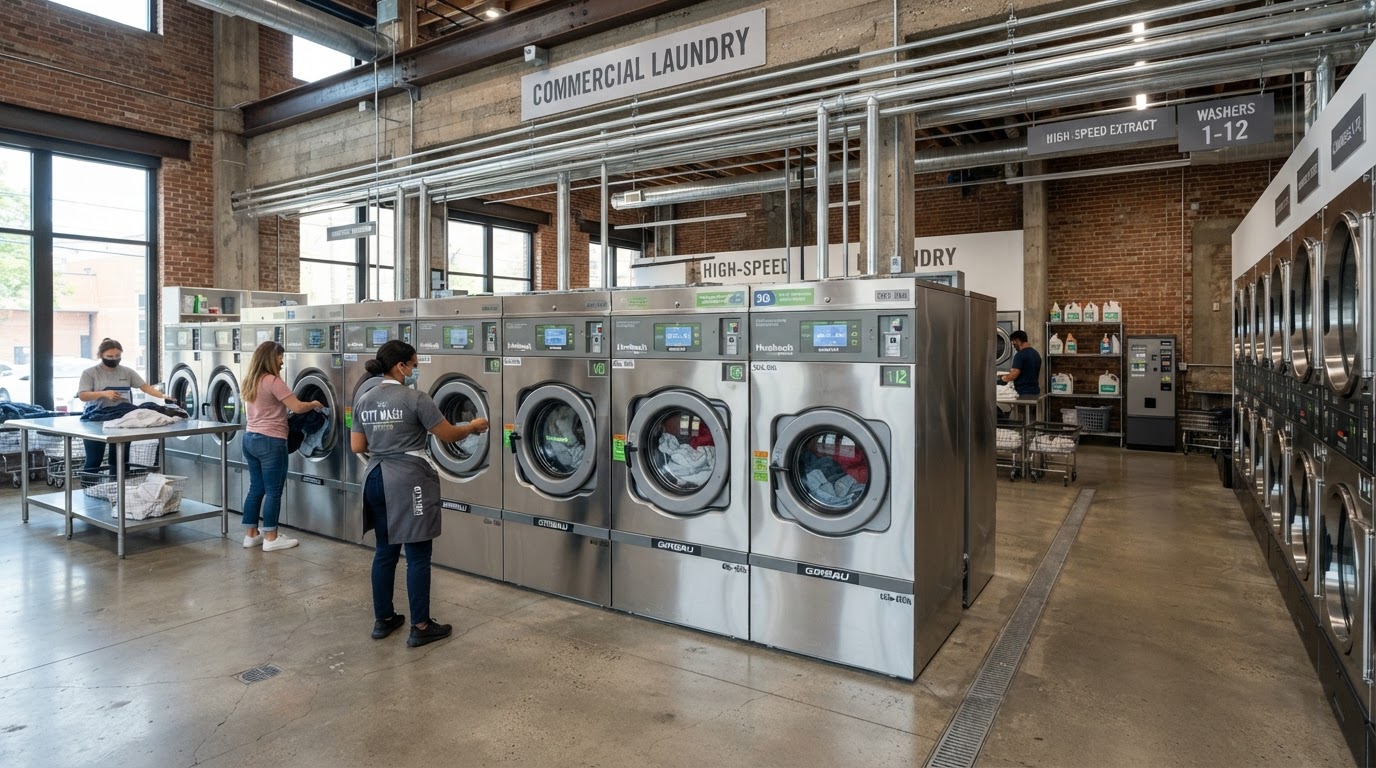
Ozone laundry technology injects dissolved triatomic oxygen (O3) into wash water. As a natural oxidizing agent, ozone destroys bacterial cell walls thousands of times faster than chlorine bleach, and it does it in cold water. That means cleaner, fresher, softer linens with less chemical wear, lower energy bills, and no toxic bleach residue on the fabrics your skin touches every day. For a commercial laundry operation — a spa, a clinic, a gym, a restaurant — ozone is the technology that lets you hit sanitization targets without sacrificing fabric life or paying the energy and replacement costs that hot-water bleaching imposes.
Discover our sanitization capabilities at all Royal Clean Locations, or request Pickup & Delivery Service across Greensboro, Winston-Salem, and Burlington.
What Ozone Actually Is
To understand why ozone laundry works so well, you have to understand the molecule itself. The oxygen you breathe is O2 — two oxygen atoms bonded together, stable and inert. Ozone is O3 — three oxygen atoms bonded, and that third atom makes the molecule fundamentally unstable. Ozone desperately wants to shed that third oxygen atom and return to stable O2, and that desperate instability is exactly what makes it such a powerful oxidizer.
When ozone contacts another molecule — a bacterium, a virus, an odor compound — it transfers that third oxygen atom to the target in a violent chemical reaction called oxidation. The target's cell wall or molecular structure is ruptured; the ozone becomes ordinary O2. This is the same chemistry that makes the air smell fresh after a thunderstorm: lightning generates ozone, which oxidizes the odor compounds in the air, and the result is that clean, sharp smell we associate with rain.
In a laundry context, that oxidizing power is directed at the microorganisms and odor compounds in your wash water. The ozone is generated on-site (there is no ozone delivery truck — it cannot be stored, because it reverts to O2 within minutes), dissolved into the cold wash water, and injected into the drum where it goes to work on whatever bacteria, viruses, and odor molecules it contacts.
How Ozone Attacks Bacteria
Ozone is an unstable molecule that desperately wants to shed its third oxygen atom. When it contacts a microorganism, it oxidizes the cell membrane and ruptures the cell, killing the organism. Because the reaction happens fast, bacteria, viruses, and odor compounds are neutralized within minutes rather than the long contact time bleach requires. The only byproduct is ordinary oxygen, which is why ozone leaves no chemical residue on your clothes and no chlorine smell in your linens.
The kill mechanism matters for understanding why ozone is not just "a different bleach." Bleach diffuses into a bacterial cell and slowly denatures its proteins over minutes of contact. Ozone physically tears the cell membrane apart on contact, which is why ozone's kill rate is measured in seconds rather than minutes. For a commercial operation that needs to turn linens over fast, that speed is an operational advantage, not just a chemical one.
Key Advantages of Ozone Wash
Ozone vs Traditional Bleach
| Factor | Ozone | Chlorine Bleach |
|---|---|---|
| Water temp | Cold | Hot |
| Fabric wear | Low | High |
| Residue | None | Chemical |
| Odor control | Molecular destruction | Fragrance masking |
| Color safety | High | Fades dyes |
| Energy use | Low | High |
| Linen lifespan | Long | Short |
| Kill speed | Seconds | Minutes |
| Byproduct | Oxygen | Chlorine compounds |
Where Ozone Shines in Commercial Settings
How an Ozone Laundry System Works
An ozone laundry system has three main components. First, an ozone generator, which produces ozone from ambient air or concentrated oxygen using an electrical discharge (the same principle as lightning producing ozone in a thunderstorm). Second, a dissolution system, which mixes the ozone gas into the wash water — usually a venturi injector that forces the gas into solution under pressure. Third, the wash cycle programming, which times the ozone injection so the dissolved ozone is at peak concentration exactly when the linens are in the water.
The system runs entirely on-site and on-demand. Ozone cannot be bottled or stored because it reverts to oxygen within minutes, so every ounce of ozone used in the wash is generated seconds before it goes to work. This is why ozone laundry is a technology you find in commercial laundromats and route operations rather than on a grocery store shelf — it requires the infrastructure to generate and dissolve the gas on demand.
The Commercial Case for Ozone
For the commercial accounts across the Triad, the Commercial Laundry program delivers the ozone advantage on a route schedule, and the Request a Bid flow sizes the program to the account's volume. The energy saving pays back the ozone equipment within months for a busy operation; the linen-life saving keeps paying back for the life of the equipment; the residue elimination is the regulatory and the marketing win that the conventional hot-bleach competition cannot match. For a spa, a gym, a clinic, a restaurant — any account whose linens see daily volume — ozone is the technology that lets the operation hit a higher hygiene standard at a lower environmental and dollar cost than the hot-bleach alternative, and it is the reason the commercial standard has moved past bleach.
Frequently Asked Questions
Is ozone laundry safe for sensitive skin?
Yes. Ozone leaves no chemical residue, which makes it ideal for hypoallergenic washing and baby clothes. It is gentler than bleach-based sanitization and does not trigger the contact dermatitis that bleach residue can cause.
Does ozone remove smell from towels?
Ozone is one of the most effective odor destroyers available. It breaks down the mildew and bacteria compounds that make towels smell sour, even in cold water where bleach would be ineffective.
Can I get ozone laundering for my business linens?
Yes. Our Commercial Laundry program uses ozone as the backbone of our sanitization. Request a Bid for route pricing across the Triad.
Is ozone better than bleach for sanitizing?
For most commercial laundry applications, yes — comparable kill rates, lower fabric wear, no residue, and lower energy cost. Bleach still has a role for certain whitening applications, but ozone is the better everyday sanitization choice.
Does ozone work in cold water?
Yes, and that is its biggest advantage. Ozone is most effective in cold water, which is the opposite of bleach. Cold ozone protects fibers and saves the energy that hot bleaching would otherwise require.
Does ozone fade colored fabrics?
No. Unlike chlorine bleach, which strips dye from colored fabrics, ozone is color-safe at laundry concentrations. This is why it is the preferred sanitization method for colored uniforms, salon towels, and any linens where color retention matters.
Cleaner, Greener, Softer
Ozone is the future of commercial laundry: cleaner results, lower energy, longer-lasting fabric. It sanitizes in cold water what bleach could only manage in hot, it leaves no chemical residue, and it extends linen life enough to pay for itself in replacement savings alone. Experience it at any Royal Clean store and see why professional linen care has moved past bleach — your linens, your energy bill, and your skin will all thank you.
Did you find this guide helpful?
Give it a heart to help other readers discover it.
Need Professional Drop-Off Wash & Fold in Winston-Salem?
Bring your delicates, bulky comforters, or commercial linens to 658 S Stratford Rd. Open daily from 5 AM to 11 PM.
Reader Discussion (2)
This guide completely saved my favorite cashmere sweater! I had no idea standard detergent was destroying the fibers.
We visit the Stratford Rd location every weekend for wash & fold. The staff is always so attentive!