
Removing Grease & Heavy Cooking Oils from Restaurant Aprons
Kitchen grease bonds to cotton fibers at the molecular level. Use degreasers, hot water, and enzyme detergent to lift oil without ruining the apron's color or weave.
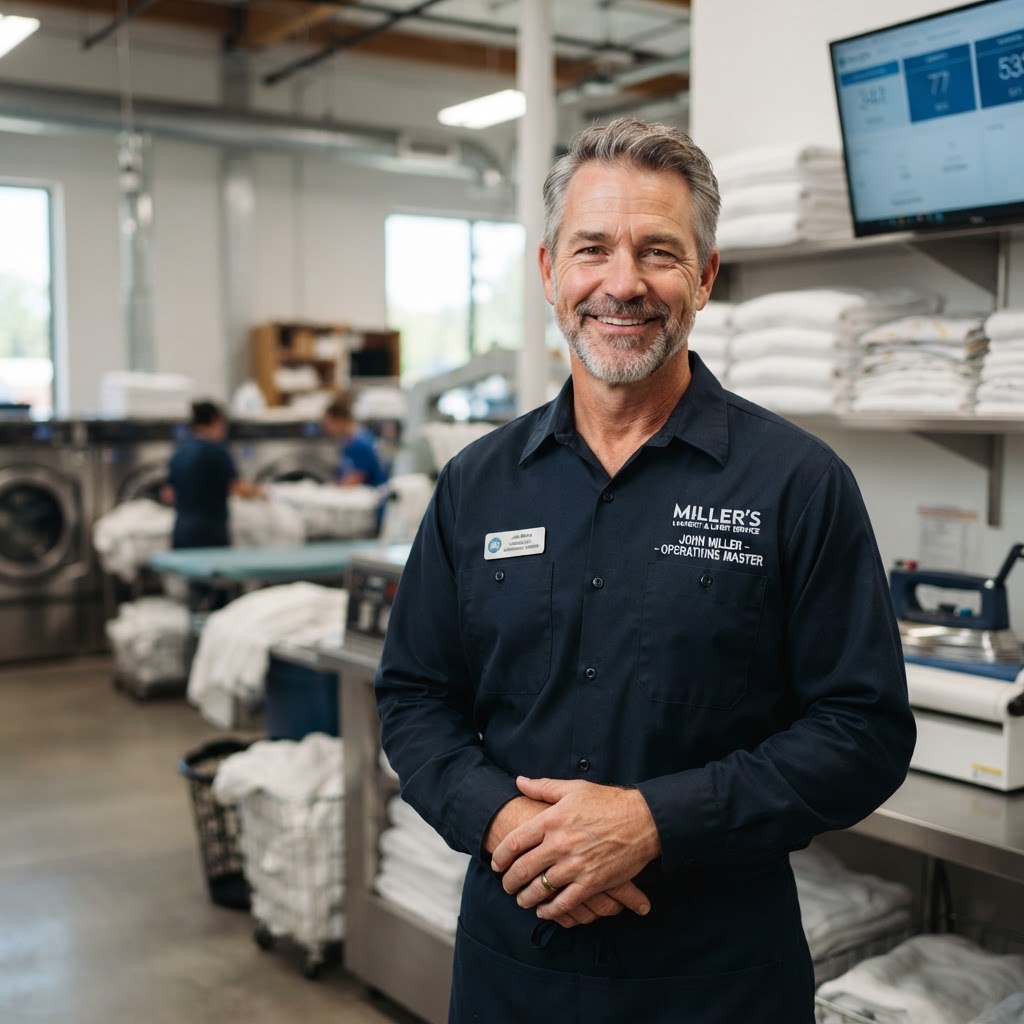
Marcus Vance
Master Cleaner
Removing Grease & Heavy Cooking Oils from Restaurant Aprons
Restaurant aprons are a grease chemistry problem as much as a laundry problem. Cooking oils — especially polymerized oils from fryers and grills — bond to cotton fibers at the molecular level, and a standard wash cycle does not break that bond. The result is aprons that look clean but carry a faint grease film that transfers to everything they touch, and a yellowing that builds over weeks as the trapped oil oxidizes. The correct protocol uses a degreaser to saponify the oil, hot water to melt and lift it, and an enzyme detergent to clear the organic residue the degreaser leaves behind. This is the difference between an apron that is genuinely clean and one that looks clean but still smells like the line.
For restaurant linen programs across the Triad, visit our Greensboro Market St store or Request a Bid for route delivery across Greensboro, Winston-Salem, and Burlington.
The Chemistry of Kitchen Grease
Cooking oil is a triglyceride — a fat molecule that water alone cannot dissolve. In a kitchen, heat polymerizes the oil, cross-linking the fatty acid chains into a tougher, more bonded form that resists standard detergent. This is why a line cook's apron after a Friday night service is harder to clean than the same apron after a slow Tuesday: the polymerized oil from heavy fryer use bonds more tightly to the cotton. The correct response is chemistry, not more detergent — a degreaser that saponifies the fat into water-soluble soap, followed by hot water to melt and flush it, followed by an enzyme detergent to clear the organic residue.
To understand why a standard wash fails, it helps to understand the difference between fresh oil and polymerized oil. Fresh cooking oil is a triglyceride — three fatty acid chains attached to a glycerol backbone. It is nonpolar, which is why water alone cannot lift it (water and oil repel each other). A standard laundry surfactant can bridge that gap: one end grabs the oil, the other grabs the water, and the oil lifts off the fiber and rinses away. That works for fresh oil, and it is why a home kitchen spill cleans up fine in a normal wash.
Polymerized oil is a different animal. When cooking oil is heated to frying temperatures — typically 350 to 400 degrees Fahrenheit — the fatty acid chains cross-link into a polymer network that bonds to the cotton fiber far more aggressively than fresh oil. The cross-linked polymer is not a simple nonpolar liquid that a surfactant can lift; it is a tough, adhered film that the surfactant cannot fully wet. This is why a fryer apron survives a standard wash looking clean but carrying a film — the surfactant lifted the surface oil but left the bonded polymerized layer behind.
The Restaurant Apron Protocol
The pre-treat step is the one most kitchens skip and the one that matters most. A degreaser needs dwell time to saponify the polymerized oil — the chemical reaction that converts the fat into a water-soluble soap takes minutes, not seconds. An apron tossed straight into a hot wash without pre-treatment comes out with the surface oil lifted and the bonded oil still in place, which is why a kitchen that skips pre-treating ends up with aprons that yellow within a month.
What Does Not Work on Kitchen Grease
Grease Type and Treatment
| Grease Source | Chemistry | Best Treatment |
|---|---|---|
| Fryer oil | Polymerized triglyceride | Degreaser, hot wash |
| Grill fat | Rendered animal fat | Enzyme, warm-hot wash |
| Butter, dairy | Lipid + protein | Degreaser + enzyme |
| Salad oil | Liquid triglyceride | Dish soap, warm wash |
| Shortening | Solid fat | Hot wash, degreaser |
The Polymerization Problem
The reason kitchen grease is harder than household grease is polymerization. When cooking oil is heated to high temperatures — as it is in a fryer or on a grill — the fatty acid chains cross-link into a tougher, more bonded polymer. This polymerized oil bonds to cotton fibers far more aggressively than fresh oil, which is why a line cook's apron after a busy service is dramatically harder to clean than the same apron after a slow shift. The degreaser is what breaks the polymerized bond: it saponifies the fat, converting it into a water-soluble soap that the hot wash can flush away. Without the degreaser, the polymerized oil survives a standard wash and builds up cycle after cycle into the yellowing, greasy film that characterizes a poorly maintained apron program.
The Yellowing That Builds Over Time
A restaurant apron that is not degreased properly does not look dirty after one wash — it looks fine. But over weeks, the trapped polymerized oil oxidizes, and the apron yellows. That yellowing is not a stain; it is the accumulated oil residue reacting with oxygen and heat, the same chemistry that makes old cooking oil go rancid. Once the yellowing sets, it is very difficult to reverse, which is why prevention — the degreaser in every wash — is the only reliable approach. An apron program that degreases from day one stays white; one that does not yellows within a month and never fully recovers.
The economics compound the problem. A set of white aprons that yellows within a month has to be replaced within three months to maintain a professional front-of-house appearance, which is a recurring capital expense that a degreasing protocol eliminates entirely. The degreaser costs pennies per load; the apron replacement costs dollars per apron. The math is not close.
Why Restaurants Outsource Apron Laundry
A busy kitchen runs through aprons faster than a residential washer can keep up, and the grease load is heavier than home detergents are designed for. A commercial partner runs high-capacity machines with commercial degreasers and hot water, and returns aprons clean, folded, and ready to grab — on a route schedule that keeps the line stocked. For a restaurant running thirty aprons a day, in-house laundry is a hidden labor cost and a consistent quality risk; a route partner turns it into a predictable expense with guaranteed results.
The break-even for a restaurant is usually around twenty aprons a day. Below that, in-house with the right degreaser can work. Above it, the labor, the utility draw, and the quality inconsistency make a commercial route the cheaper option on a fully-loaded basis — and the aprons come back genuinely clean, not just visually clean. A restaurant owner who has never outsourced usually underestimates the labor because the laundry happens in stolen minutes between prep and service, but those stolen minutes add up to a full shift of labor over a week, and that labor is labor not spent on the food.
Frequently Asked Questions
How do I get cooking oil out of a cotton apron?
Pre-treat with dish soap or a commercial degreaser, let it dwell ten minutes, then wash in the hottest water the fabric allows with an enzyme detergent. The degreaser saponifies the oil so it rinses away.
Will hot water shrink my aprons?
Most commercial aprons are cotton or cotton-poly blends that tolerate hot water. Check the care label; if the apron has a printed logo, test hot water on a corner first.
Can I bleach restaurant aprons?
Chlorine bleach fades colored aprons and weakens fabric. Oxygen bleach is the gentler, color-safe alternative for sanitizing kitchen linen without the damage.
Do you offer commercial apron laundry for restaurants?
Yes. Our Commercial Laundry program handles recurring apron and towel accounts with degreasing and hot-water sanitization. Request a Bid for route pricing.
Why do my aprons still smell like grease after washing?
Polymerized fryer oil bonds to the fiber and survives a standard wash. A degreaser plus hot water breaks the bond; without those, the grease residue lingers and oxidizes into a permanent smell.
Why are my white aprons turning yellow?
Trapped polymerized cooking oil oxidizes over weeks into a yellow film — the same chemistry that makes old cooking oil go rancid. A degreaser in every wash prevents the buildup; once it yellows, it is very hard to reverse.
Clean Aprons, Clean Kitchen
Kitchen grease is a chemistry problem that needs the right chemistry to solve: degreaser, hot water, and enzymes. For restaurants across the Triad, our commercial program runs the degreasing cycles that home detergents cannot match — and returns aprons clean, folded, and ready for service.
Did you find this guide helpful?
Give it a heart to help other readers discover it.
Need Professional Drop-Off Wash & Fold in Winston-Salem?
Bring your delicates, bulky comforters, or commercial linens to 658 S Stratford Rd. Open daily from 5 AM to 11 PM.
Reader Discussion (2)
This guide completely saved my favorite cashmere sweater! I had no idea standard detergent was destroying the fibers.
We visit the Stratford Rd location every weekend for wash & fold. The staff is always so attentive!