
How to Restore Yellowed White Sheets and Towels Without Bleaching the Fiber Thin
The yellow in white cotton is body-oil oxidation and hard-water mineral, not age. An oxygen-bleach soak, a hot strip wash, and a vinegar rinse reverse it without the chlorine that eats the fiber.

Elena Rostova
Sustainability Chemist
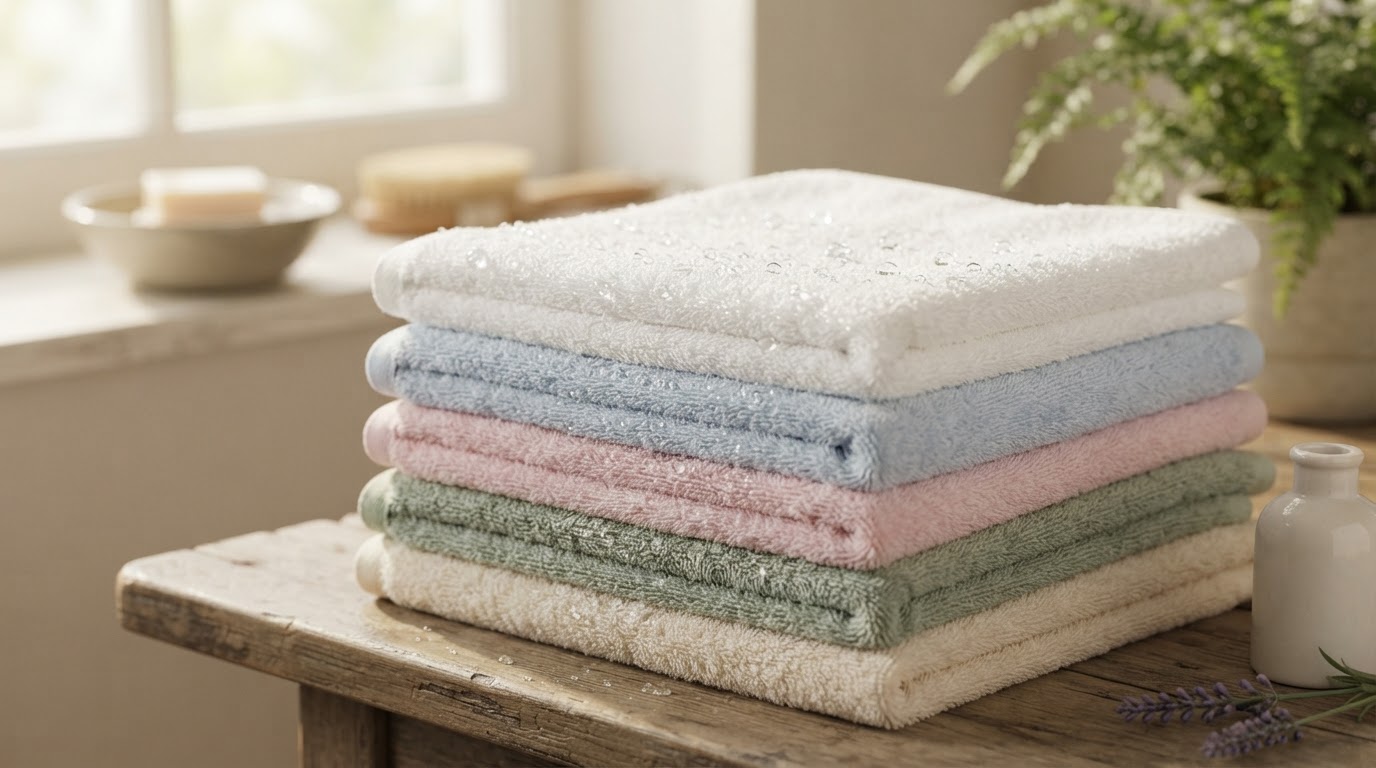
How to Restore Yellowed White Sheets and Towels Without Bleaching the Fiber Thin
The yellow that creeps into white sheets and towels over a year is not age — it is two compounds, and both are reversible. The first is the oxidation of body oil: the sebum that skin deposits on the fabric every night, not fully lifted by a regular wash, oxidizes over cycles into a yellow-gray film that builds until the white is a dingy cream. The second is hard-water mineral: the calcium and magnesium in the water (and the Triad's water runs moderately hard) deposit on the fiber as a mineral film that traps the body oil and the detergent residue and turns the white gray. The instinct — more chlorine bleach, hotter water — is the one that makes it worse, because chlorine yellows cotton over time and weakens the fiber, and the hot water that does not reverse the oxidation sets it deeper. The fix is an oxygen-bleach strip and a mineral chelation, and it restores the white without the chlorine damage.
For white bedding you would rather have professionally whitened, our Greensboro Market St drop-off team runs whitening cycles, or browse all four Royal Clean Locations.
What the Yellow Actually Is
The yellow is two separate compounds, and the restore addresses both. The body-oil yellow is oxidized sebum — the same oxidation that yellows the underarms of a white shirt, but across the whole sheet where the body contacts it. It bonds to the cotton fiber in a way a regular wash does not fully lift, and it re-oxidizes darker between washes. The hard-water yellow is a mineral film — calcium and magnesium carbonate deposited on the fiber — that traps the body oil and the detergent residue and turns the white a gray-yellow. A regular wash lifts the fresh oil and leaves the bonded compound and the mineral film; over a year, the compound and the film build until the white is dingy. The restore breaks the body-oil bond (oxygen bleach) and chelates the mineral (citric acid or a washing-soda additive), and the white comes back.
The Oxygen-Bleach Strip Wash
The core of the restore is the strip wash, and the active is oxygen bleach — sodium percarbonate — not chlorine. The protocol: fill the washer (or a large tub) with the hottest water the machine offers, dissolve a full scoop of oxygen bleach in the water, submerge the yellowed sheets and towels, and let them soak for 2 to 4 hours, or overnight for a deep set. The oxygen bleach releases hydrogen peroxide into the water, which reverses the oxidation that turned the body-oil yellow — the same chemistry that lifts a perspiration stain, scaled to a load. After the soak, run the wash cycle with a half-dose of enzyme detergent and a half-cup of washing soda (sodium carbonate) to chelate the hard-water mineral. A second rinse clears the residue.
Never use chlorine bleach for the restore. Chlorine yellows cotton over time — the exact problem you are reversing — and it weakens the fiber, shortening the sheet's and the towel's life by a third. Oxygen bleach does the same whitening without the yellowing and without the fiber damage, and it is color-safe on the rare white-with-color stripe.
The Hard-Water Chelation
If the yellow is mostly mineral — the gray-yellow of hard-water film — the oxygen bleach alone does not fully lift it, because the mineral is bonded to the fiber, not oxidized. The chelation is the step that lifts the mineral: washing soda (sodium carbonate) in the wash sequesters the calcium and the magnesium so they do not re-deposit, and a citric acid rinse (a half-cup dissolved in the rinse, or a dedicated descaler) dissolves the mineral film on the fiber. For a deep hard-water gray, the strip wash with both the oxygen bleach and the washing soda, followed by a citric acid rinse, is the full restore. A monthly maintenance dose of washing soda in the regular wash keeps the mineral from building back.
The Vinegar Rinse — the Maintenance Step
The maintenance that keeps the white from yellowing again is the vinegar rinse. A half-cup of white vinegar in the rinse, every wash, strips the body-oil residue before it oxidizes and the mineral film before it builds. Vinegar is a mild acid that chelates the hard-water mineral and cuts the detergent residue, and it is the single step that extends the time between strip washes from a month to a season. A monthly strip wash and a weekly vinegar rinse keep white cotton white; a strip wash alone, without the maintenance, yellows back within a quarter.
The Detergent Dose — Less Is More
The counterintuitive part of the restore is that the yellow is partly the detergent. Overdosing detergent leaves residue in the fiber that the rinse does not clear, and the residue oxidizes yellow and traps the body oil — the sheet that is washed in a full cap of detergent yellows faster than one washed in a half-dose, because the residue itself is the yellow. Dose to the load size and the soil, not the cap line; run a second rinse on the heavy loads; and the vinegar in the rinse strips the residue the wash leaves. The sheet washed in less detergent, with a vinegar rinse, stays whiter than the sheet washed in more.
The Dry — Sunlight Is the Finisher
The finisher for white cotton is the sun. Ultraviolet light is a natural bleacher — it reverses the residual oxidation the oxygen bleach did not fully clear — and a day on the line in direct sun brightens white cotton more than a second strip wash. The sun is the traditional whitener, and the line-dry in the sun is the finisher the restore ends on. A hot dryer does not bleach; it only dries. For the whitest white, the restore is the oxygen-bleach strip, the chelation rinse, and a day in the sun.
Frequently Asked Questions
Will chlorine bleach whiten my sheets?
It brightens once, but it yellows cotton over time and weakens the fiber, shortening the life by a third. Oxygen bleach whitens without the yellowing and the damage.
Why do my white sheets keep turning yellow?
Body-oil oxidation and hard-water mineral film, built up over washes that do not fully lift them. An oxygen-bleach strip wash reverses it; a monthly vinegar rinse prevents it.
Does hard water cause yellowing?
Yes. The calcium and magnesium deposit as a mineral film that traps the body oil and the detergent residue and turns the white gray. Washing soda in the wash and a citric acid rinse chelate the mineral.
How do I strip wash my sheets?
Hot water, a full scoop of oxygen bleach, a soak of 2 to 4 hours (or overnight), then a wash with enzyme detergent and washing soda, and a second rinse. Never chlorine.
Does the sun whiten sheets?
Yes — UV is a natural bleacher that reverses the residual oxidation. A day on the line in direct sun brightens white cotton more than a second strip wash.
The Bottom Line on Yellowed Whites
An oxygen-bleach strip wash, washing soda and a citric acid rinse for the hard-water mineral, a weekly vinegar rinse for the maintenance, less detergent, and a day in the sun. Never chlorine. Follow that and white cotton restores to white and stays white — and for the loads you'd rather hand off, our Drop Off Wash & Fold teams across Greensboro, Winston-Salem, and Burlington run whitening cycles.
Did you find this guide helpful?
Give it a heart to help other readers discover it.
Need Professional Drop-Off Wash & Fold in Winston-Salem?
Bring your delicates, bulky comforters, or commercial linens to 658 S Stratford Rd. Open daily from 5 AM to 11 PM.
Reader Discussion (2)
This guide completely saved my favorite cashmere sweater! I had no idea standard detergent was destroying the fibers.
We visit the Stratford Rd location every weekend for wash & fold. The staff is always so attentive!