
How to Soften Scratchy Towels Without Damaging Fiber Loops
Scratchy towels are coated in buildup, not worn out. Strip the mineral and detergent film with vinegar and baking soda, then change the routine that caused it.

Elena Rostova
Sustainability Chemist
How to Soften Scratchy Towels Without Damaging Fiber Loops
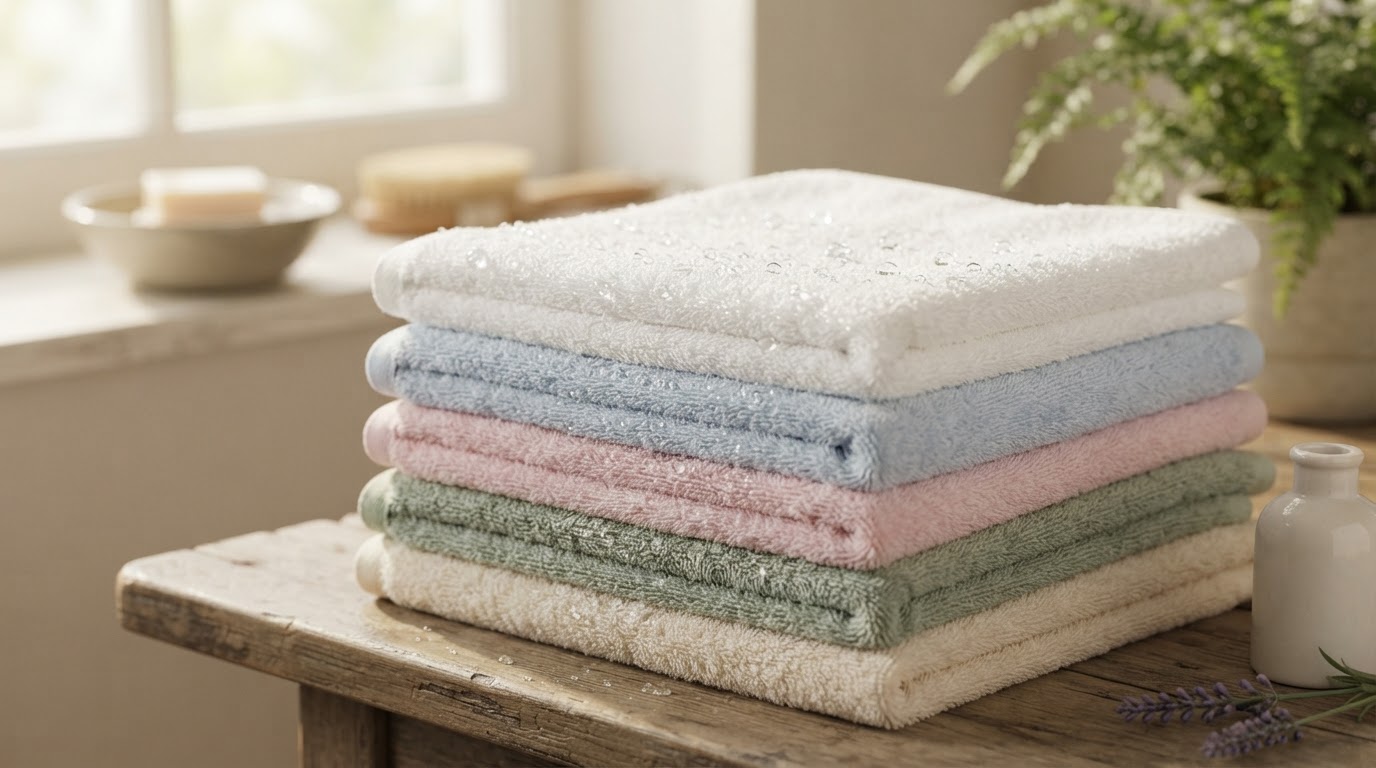
A scratchy towel is almost never a worn-out towel. It is a towel coated in buildup — mineral deposits from hard water, detergent residue from over-dosing, and softener wax from the very product that was supposed to make it soft. The buildup coats the terry loops and makes them feel stiff and harsh, and the fix is not a new towel; it is a strip wash that removes the film and a routine change that stops it coming back. This is the difference between replacing your towels and restoring them, and the chemistry is simpler than the towel industry would like you to believe.
For towel restoration across the Triad, visit our Winston-Salem Stratford Rd store or any Royal Clean Location across Greensboro and Burlington.
Why Towels Go Scratchy
The terry loops that make a towel absorbent are also what trap the buildup that makes it scratchy. Hard-water minerals (calcium and magnesium) deposit inside the loops with every wash, detergent residue from over-dosing coats the loops in a film, and fabric softener coats them in wax that is the opposite of soft. Over weeks and months, the accumulated film turns plush terry into a stiff, water-repellent surface that feels harsh against the skin. The towel is not worn — it is coated — and the coating is removable.
The irony of fabric softener is worth dwelling on, because it is the single most common cause of scratchy towels and it is the product specifically marketed to prevent them. Fabric softener works by depositing a waxy, hydrophobic (water-repelling) film on the fabric fibers. On a towel, that film coats the terry loops in wax, which makes the loops feel slick and soft for the first few washes — and then the wax builds up, the loops stiffen, and the towel becomes both scratchy and less absorbent (because the wax repels the water it is supposed to wick). The product that was supposed to soften the towel is what ruined it. The fix is to strip the wax and never use softener on towels again.
The Towel Softening Strip Wash
The vinegar and baking soda work as a pair, not separately, and the combination is the key. The vinegar (an acid) dissolves the mineral scale and the alkaline detergent residue; the baking soda (a mild alkali) lifts the loosened soil and deodorizes the trapped organic compounds. Added to the same hot cycle, they react briefly (the familiar fizz) and then settle into their respective roles — the acid dissolving, the alkali lifting. The second hot rinse is what flushes the dissolved gunk completely out of the fibers; skipping it leaves the loosened buildup to redeposit, which is why a single rinse strip wash often disappoints.
The Routine Change
The strip wash removes the existing buildup. The routine change stops the next round. If you strip but keep over-dosing detergent and using softener, the scratchiness is back within two weeks. The permanent fix is: dose the detergent to the load (not the cap), drop the fabric softener entirely (it is the number one cause of scratchy towels), use dryer balls for softness, and add a vinegar rinse to the weekly towel load to keep mineral buildup under control. Prevention is cheaper than restoration, and it is the only thing that makes the fix permanent.
What to Avoid
Vinegar vs Commercial Softeners
| Method | Effect | Residue |
|---|---|---|
| Vinegar rinse | Dissolves minerals, softens | None |
| Dryer balls | Mechanical softening | None |
| Fabric softener | Coats in wax | Yes (causes scratchiness) |
| Baking soda | Lifts odor | None |
| Oxygen bleach | Brightens, no wax | None |
The table tells the whole story. The methods that actually soften towels (vinegar, dryer balls) leave no residue; the method that causes scratchiness (fabric softener) leaves a waxy residue. The relationship is not coincidental — the residue is the mechanism. A soft towel is a towel whose loops are clean and free to fluff; a scratchy towel is one whose loops are coated in something that stiffens them. Remove the coating (vinegar strip) and stop adding new coating (no softener) and the towel stays soft. It is genuinely that simple, which is why the towel industry's softener marketing is so frustrating to anyone who understands the chemistry.
The Absorbency Connection
A scratchy towel is almost always also a less absorbent towel, and the reason is the same wax film that makes it scratchy. Terry loops absorb water by wicking it along the cotton fibers; a wax coating disrupts that wicking and makes the water bead on the surface instead of soaking in. A towel that feels scratchy is a towel that is also not doing its job — it pushes water around instead of absorbing it. The strip wash restores both the softness and the absorbency at the same time, because both were lost to the same buildup. If your towels feel soft but stop absorbing, the cause is the same and the fix is the same.
Frequently Asked Questions
Why are my towels scratchy after washing?
Buildup — mineral deposits from hard water, detergent residue from over-dosing, and softener wax — coats the terry loops and makes them feel stiff. A hot vinegar and baking soda strip wash removes the film and restores softness.
Does vinegar really soften towels?
Yes. Vinegar (acetic acid) dissolves the mineral and detergent deposits trapped in the terry loops, which is what makes towels feel stiff. The vinegar smell dissipates as the towels dry, leaving them soft and residue-free.
Should I use fabric softener to soften towels?
No. Softener is the number one cause of scratchy towels. It coats the loops in wax that kills absorbency and creates the very stiffness you are trying to fix. Use dryer balls for mechanical softening instead.
How do I strip my towels?
Run the hottest cycle with a half cup of vinegar in the wash compartment and a half cup of baking soda in the drum, then a second hot rinse to flush the dissolved buildup. Dry on medium with dryer balls.
How often should I strip my towels?
Monthly for hard-water households or if you have been using softener. Every other month if you have already eliminated softener and dose detergent correctly. Prevention makes stripping less frequent.
Why do my towels smell musty even after washing?
They were stored damp, or the buildup is trapping odor-causing bacteria. Strip wash to remove the buildup, dry completely to the core, and never store a towel that is even slightly damp to the touch.
Soft Towels, Restored
Scratchy towels are a buildup problem, not a wear problem — and buildup is reversible. Strip the film, drop the softener, and your towels stay plush for years. For bulk towel care, our ozone-equipped commercial service strips buildup at the molecular level without the chemicals that cause it.
Did you find this guide helpful?
Give it a heart to help other readers discover it.
Need Professional Drop-Off Wash & Fold in Winston-Salem?
Bring your delicates, bulky comforters, or commercial linens to 658 S Stratford Rd. Open daily from 5 AM to 11 PM.
Reader Discussion (2)
This guide completely saved my favorite cashmere sweater! I had no idea standard detergent was destroying the fibers.
We visit the Stratford Rd location every weekend for wash & fold. The staff is always so attentive!