
The Ultimate Guide to Washing & Preserving Silk, Cashmere, and Fine Delicates
A master cleaner's complete field guide to silk, cashmere, and fine delicates — fiber science, exact wash protocols, storage, moth prevention, and when to trust a professional.

Marcus Vance
Master Cleaner
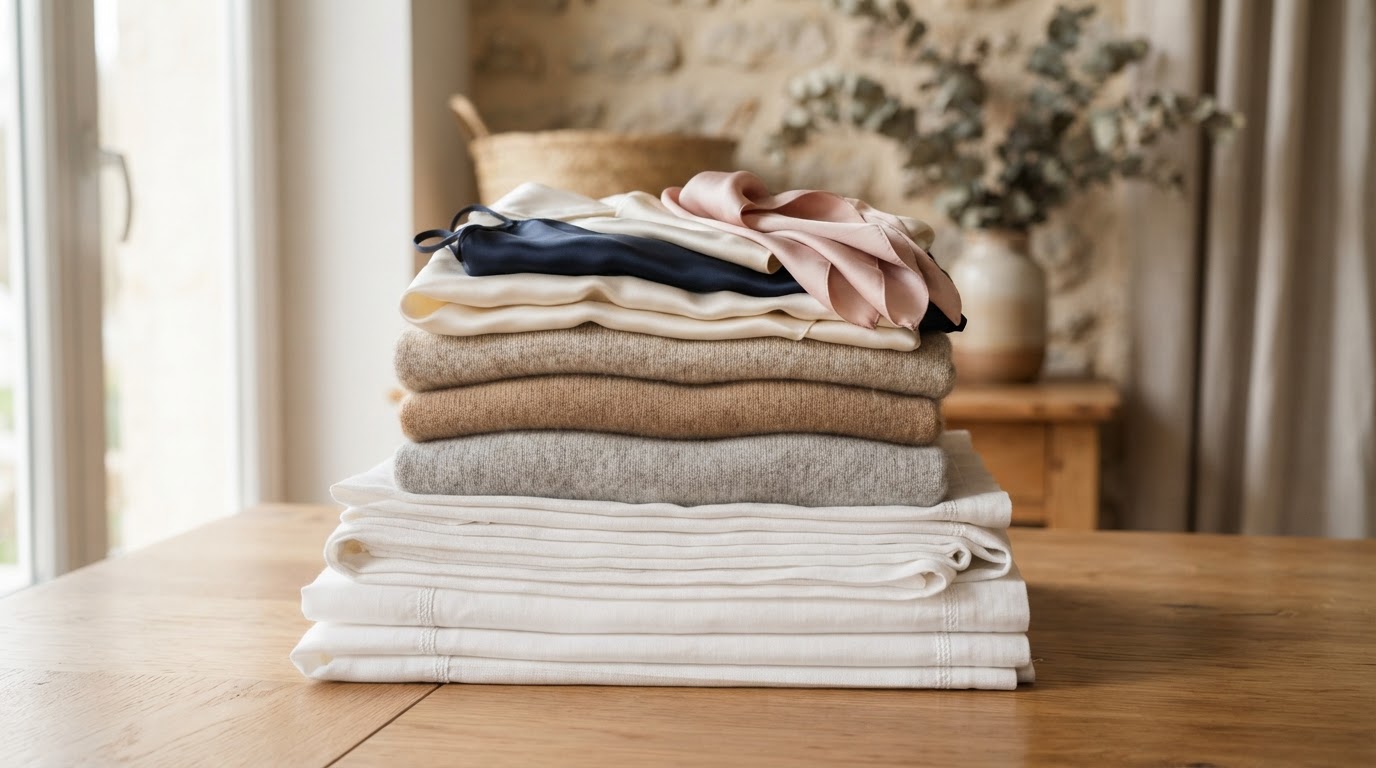
The Ultimate Guide to Washing & Preserving Silk, Cashmere, and Fine Delicates
Silk, cashmere, and fine delicates are the investments in your wardrobe that reward careful stewardship and punish neglect in equal measure. A single wash at the wrong temperature, with the wrong detergent, or under too much agitation can shrink a cashmere sweater two sizes, dull a silk blouse into a flat shadow of itself, or felt a wool scarf into a stiff, unforgiving dish towel. The reverse is also true: with a small set of professional protocols rooted in fiber science, these same garments last for decades and retain their luxurious hand wash after wash.
If you would rather trust a professional team with your most fragile pieces, our Winston-Salem Stratford Rd location in Winston-Salem offers dedicated drop-off delicate care. You can also browse all four Royal Clean Laundromat Locations across Greensboro, Winston-Salem, and Burlington.
Why Delicates Are Delicate: The Fiber Science
To care for fine fabrics intelligently, you first have to understand what makes them fragile in the first place. Silk is a continuous protein filament spun by silkworms; cashmere and wool are keratin protein fibers sheared from goats and sheep. Both are natural protein structures, and proteins share a set of well-understood vulnerabilities that dictate every rule in this guide.
Three forces destroy protein fibers:
Rule #1: Never use standard liquid detergents on raw silk or cashmere. Choose an enzyme-free, pH-neutral delicate wash formulated specifically for protein fibers.
The Complete Hand-Wash Protocol
Hand washing is the gold standard for the most fragile pieces, and done correctly it is gentler than even the best machine cycle. The goal is to mimic the controlled micro-tumble of a commercial machine with patience rather than force.
Drying: Where Most Damage Happens
Washing gets the attention, but drying is where most delicates are actually ruined. The rule is simple and absolute: never put silk, cashmere, or wool in a heated dryer. Heat relaxes the internal bonds, the tumbling distorts the shape, and the fiber locks into its new, shrunken form as it cools.
Air-dry flat, reshape while damp, and be patient. A cashmere sweater may take a full day to dry flat, and that is correct. Rushing it with heat is a one-way ticket to a smaller, stiffer garment.
Storage, Moths, and Seasonal Care
How you store delicates between wears and between seasons matters as much as how you wash them. Moths, moisture, and crushing do their slow damage while the garment hangs forgotten.
Moths are the silent killer of stored wool and cashmere. The adult moth does not eat fabric — it is the larvae, which hatch from eggs laid in dark, undisturbed folds of stored natural fiber. The first sign of moth damage is usually a small hole that appears without explanation, by which point the larvae have already moved on. Prevention is the only cure: clean garments before storage (moths are attracted to body oil and skin cell residue), store in breathable bags with cedar or lavender, and inspect stored pieces every few weeks during the warm months when moths are active.
For bulky seasonal items you would rather have professionally cleaned before they go into summer storage, learn more about our Drop Off Wash & Fold Service or schedule Pickup & Delivery so the chore is handled for you.
When to Hand It to a Professional
Some pieces genuinely should not be washed at home, and knowing which is the difference between a wardrobe that lasts and one that slowly empties into the donation bin.
Hand these to a professional:
Our Burlington S Church St and Winston-Salem Northwest Blvd teams handle delicate loads with the temperature control and low agitation they require.
Frequently Asked Questions
Can you machine wash cashmere?
Yes, if your machine has a dedicated wool or delicate cold cycle with a final spin under 600 RPM. Use a mesh bag and an enzyme-free cashmere wash. Avoid top-load agitator machines entirely, because the central post stretches and felts the fibers.
Does silk shrink in cold water?
Silk shrinks primarily from heat and agitation, not cold water alone. A brief, gentle cold wash is safe for most washable silk. Always check the care label first, and never use hot water regardless of what the label says.
How often should you wash cashmere?
Wash cashmere after three to four wears, or sooner if stained. Over-washing breaks down fibers, while under-washing lets body oils yellow the fabric. Air the sweater between wears to extend the interval.
What happens if I use regular detergent on silk?
Standard detergents contain protease enzymes that slowly digest the silk protein. A single wash may not show damage, but repeated washing thins and dulls the fiber until it loses its luster and eventually tears.
Can I unshrink a cashmere sweater?
Partially. Soak it in cool water with a small amount of hair conditioner to relax the fibers, then gently stretch it back to shape and dry flat. It rarely returns to its original size fully, but you can often recover most of the shrinkage.
Is fabric softener safe for delicates?
No. Softener coats protein fibers in a silicone film that dulls silk's luster and reduces cashmere's breathability. Use a quarter cup of white vinegar in the rinse instead, which softens naturally without residue.
How do I get a stain out of silk?
Blot (never rub) the stain with a clean cloth, then spot-treat with a small amount of enzyme-free delicate wash diluted in cool water. Test on an inconspicuous area first. For oil stains, a touch of baby powder left overnight can absorb the oil before washing.
The Bottom Line on Fine Fabric Care
Fine fabrics are not fragile — they are specific. They reward a protocol that respects the chemistry of protein fibers: cool water, no enzymes, no heat drying, gentle handling, and breathable storage. Master those five principles and your silk and cashmere will outlast fast fashion by a decade. For the pieces that deserve professional hands, our teams across Greensboro, Winston-Salem, and Burlington are ready to help.
Did you find this guide helpful?
Give it a heart to help other readers discover it.
Need Professional Drop-Off Wash & Fold in Winston-Salem?
Bring your delicates, bulky comforters, or commercial linens to 658 S Stratford Rd. Open daily from 5 AM to 11 PM.
Reader Discussion (2)
This guide completely saved my favorite cashmere sweater! I had no idea standard detergent was destroying the fibers.
We visit the Stratford Rd location every weekend for wash & fold. The staff is always so attentive!