
How to Wash and Store Winter Comforters So They Last a Decade
A down or down-alternative comforter is a ten-year investment if you wash it right and store it right. Here is the protocol that protects the loft through summer storage.

Marcus Vance
Master Cleaner
How to Wash and Store Winter Comforters So They Last a Decade
A quality down comforter is one of the most expensive textiles in a household and one of the most abused by home laundry. The comforter that lasts a decade is the one washed twice a year and stored breathable; the comforter that goes flat and lumpy in three years is the one run through a home machine on hot and sealed in a plastic bin for the summer. The difference is protocol, not the comforter.
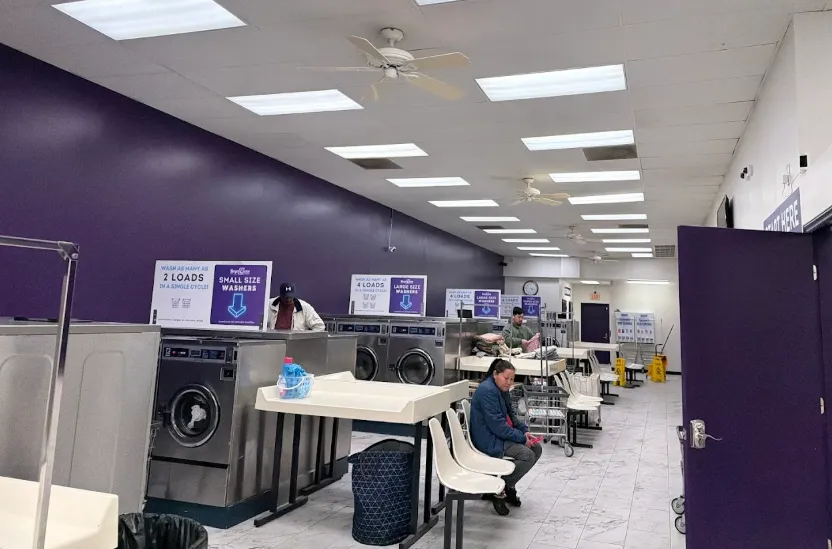
For the wash itself, a home machine is almost always the wrong tool — a king comforter compresses into a lump the drum cannot agitate, and the spin throws the load off-balance hard enough to damage the bearing. Our Burlington S Church St carries the multi-load commercial machines built for this exact load.
Why Home Machines Struggle With Comforters
The core problem is drum capacity. A king comforter stuffed into a residential drum compresses into a dense bundle the water and detergent cannot penetrate. The outer shell over-cleans while the down fill at the center never sees detergent at all, and the comforter comes out patchy — clean at the edges, carrying body-oil residue at the center where it matters most.
The second problem is the spin. A wet king comforter holds two to three gallons of water and weighs thirty-plus pounds. A residential washer's spin throws that off-balance load against the tub bearings, and a few such loads shorten the washer's life dramatically. A commercial washer balances the load and extracts water at a G-force home machines cannot reach.
The Wash Protocol
Drying: The Step That Decides the Loft
Drying is where comforters are won and lost. Down clumps when wet and holds moisture stubbornly; dried wrong, the clumps lock in and the comforter goes permanently flat. The protocol is low heat, dryer balls, and patience.
Add three to four clean tennis balls or wool dryer balls to the load. As the comforter tumbles, the balls knock against the down and break up the clumps so the loft restores as it dries. Run on low heat — high heat scorches the down clusters and the cotton shell. Expect two to three dryer cycles for a king; pulling it out damp "to save time" leaves mildew-prone clumps.
Pull the comforter out every thirty minutes and manually fluff and redistribute the down by hand. The center of a comforter dries last, and redistributing the down prevents the lumpy center that ruins a comforter's feel.
Storage: The Summer That Decides the Lifespan
How you store a comforter between seasons matters as much as how you wash it. The rule is breathable, never sealed. A plastic vacuum bag traps residual moisture and breeds mildew through the down over a humid NC summer; by fall, the comforter smells musty and the down has compacted. Store in a breathable cotton bag in a dry closet, never in a basement or attic where humidity swings.
Never store a comforter compressed for the entire summer. Compression flattens the down clusters permanently; the loft does not return when you take it out. Store it loose or lightly folded in a cotton bag.
The Down-Alternative Difference
Down-alternative (synthetic) comforters follow the same protocol with two differences. Synthetic fill tolerates slightly warmer water and a warmer dryer, and it does not clump as stubbornly as down. The tradeoff is that synthetic fill flattens faster over the years regardless of care — a down comforter lasts a decade, a good synthetic lasts five.
Frequently Asked Questions
Can I wash a king comforter at home?
Most home machines are too small to let a king comforter tumble freely, which causes uneven cleaning and drum damage. A commercial machine is the safer choice; find one at our locations.
How often should I wash a comforter?
Every three to six months for a daily-use comforter, plus an end-of-season wash before storage. Over-washing flattens down; under-washing leaves body-oil residue that yellows the shell.
Why did my comforter go lumpy?
Down clumped during drying. Fix it by re-running the dryer on low with dryer balls and manually fluffing every thirty minutes until the clumps break.
Is dry cleaning better for a down comforter?
Not usually. Down loses its loft under dry-cleaning solvent. Wash-and-dry with the right protocol preserves the fill better.
Comforters That Last
Wash twice a year in a commercial machine, dry on low with dryer balls and patience, and store breathable and uncompressed. Follow that and a quality down comforter lasts a decade of winters. Bring yours to Burlington S Church St, Greensboro Market St, or Winston-Salem Northwest Blvd for the capacity your home machine lacks.
Did you find this guide helpful?
Give it a heart to help other readers discover it.
Need Professional Drop-Off Wash & Fold in Winston-Salem?
Bring your delicates, bulky comforters, or commercial linens to 658 S Stratford Rd. Open daily from 5 AM to 11 PM.
Reader Discussion (2)
This guide completely saved my favorite cashmere sweater! I had no idea standard detergent was destroying the fibers.
We visit the Stratford Rd location every weekend for wash & fold. The staff is always so attentive!