
Washable vs. Dry-Clean: How to Read a Care Label and When the Label Is Wrong
The care label is the law and the guide, and the 'dry-clean only' tag is often the manufacturer's liability cover, not the fiber's need. Learn to read the fiber, the symbol, and the tag, and save the dry-clean bill on the garments that wash.

Elena Rostova
Sustainability Chemist
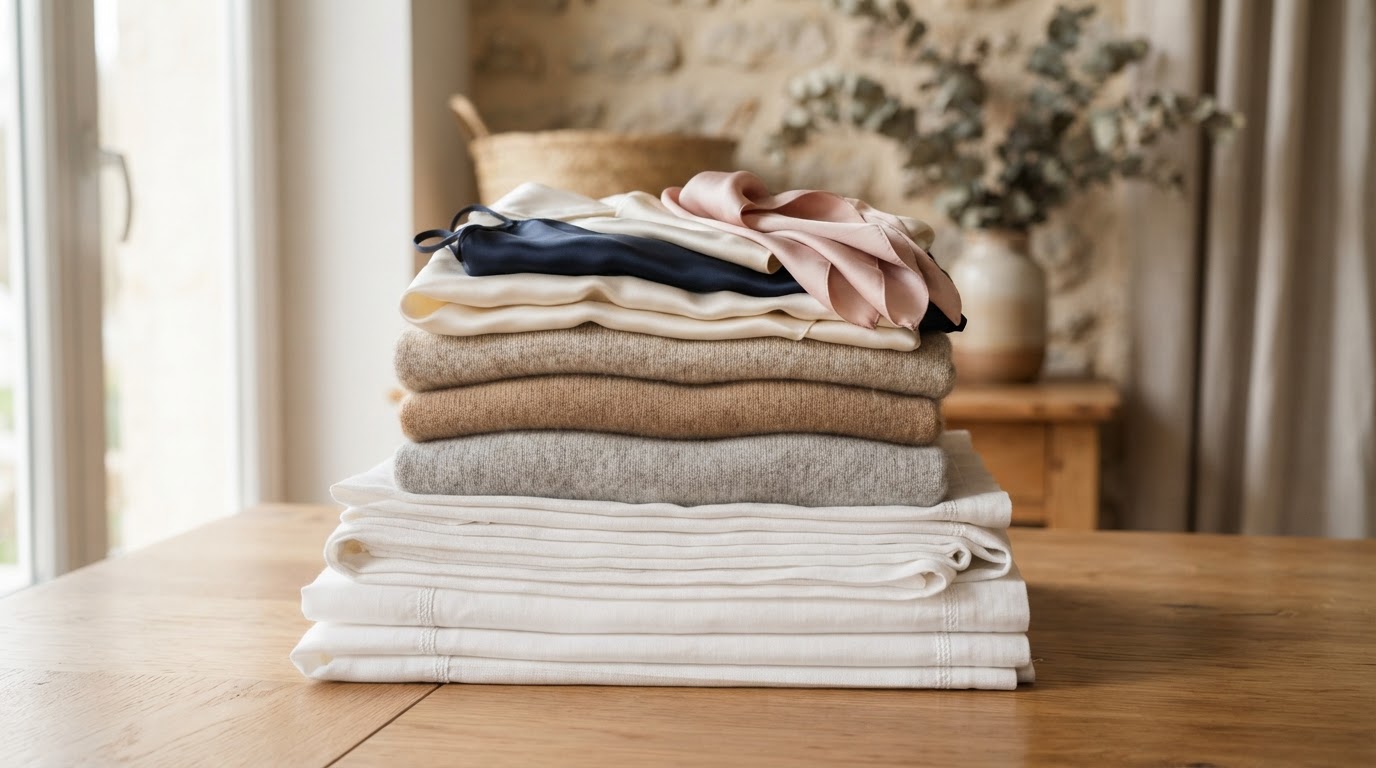
Washable vs. Dry-Clean: How to Read a Care Label and When the Label Is Wrong
The care label is the part of the garment most people read as a rule and the part the careful reader reads as a guide, because the label is the manufacturer's instruction for the garment's care and the manufacturer's liability cover at the same time, and the two are not always the same. The 'dry-clean only' tag on a silk blouse is the care the silk needs; the 'dry-clean only' tag on a cotton blend is the manufacturer's way of avoiding the return for the shrink the home wash might cause, and the cotton blend that washes cool and reshapes well is the garment the dry-clean bill wastes. The skill is the one that reads the fiber first (the cotton, the silk, the wool, the synthetic), the symbol second (the washtub, the triangle, the circle), and the tag third (the words), and the skill is the one that saves the dry-clean cost on the garments that wash and reserves the dry-cleaner for the garments that genuinely need the solvent. The protocol is the one that respects the fiber over the tag, and it is the one that keeps the garment in service at the lower cost.
For the dry-clean-only and the specialty garments you would rather have professionally cleaned, our Greensboro Market St drop-off team handles specialty fibers, or browse all four Royal Clean Locations.
The Care Label Is the Law and the Cover
The care label is the legal instruction the manufacturer is required to attach to the garment, and it is the instruction that protects the manufacturer from the return the wrong wash would cause. The 'dry-clean only' tag is the one the manufacturer uses when the home wash is a risk — the shrink, the bleed, the felting — and the tag is the cover whether the risk is real or cautious. A wool sweater that felts in a hot wash genuinely needs the dry-clean or the careful hand-wash; a cotton blend with a lining that might shrink needs the dry-clean tag for the lining, not the cotton. The reader who understands the cover reads the fiber and decides, and the reader who reads the tag as the rule pays the dry-clean bill on the cotton blend that would have washed cool. The skill is the fiber-first read.
The Fiber — the First Read
The fiber is the first read, because the fiber is the determinant of the care. The cellulosics — cotton, linen, ramie, hemp — wash, in cool to warm water, with the reshape and the press the bast fiber needs. The protein fibers — wool, cashmere, silk — are the careful wash or the dry-clean, because the protein felts in the heat and the agitation and the silk loses its hand in the wrong detergent. The synthetics — polyester, nylon, the blends — wash, in cool to warm, with the inside-out turn for the color. The fiber on the label tells the care; the tag tells the cover. A cotton with a 'dry-clean only' tag is the cotton the cover protects; a silk with a 'machine wash' tag is the rare washable silk the finish allows.
The Symbols — the Second Read
The symbols are the second read, and they are the international language the label uses when the words are the cover. The washtub with the hand means the hand-wash; the washtub with the number is the maximum temperature in Celsius; the washtub with the line under it is the gentle cycle. The triangle is the bleach — the clear triangle is any bleach, the crossed triangle is none, the triangle with the lines is the oxygen bleach only. The circle is the dry-clean — the plain circle is the dry-clean, the circle with the P is the any solvent, the circle with the F is the petroleum solvent, the crossed circle is the do-not-dry-clean. The square is the dry — the square with the circle is the tumble dry, the square with the line is the line dry. The symbol is the guide the words are the cover for.
The 'Dry-Clean Only' — Often the Cover
The 'dry-clean only' tag is the one the careful reader questions, because the tag is the cover the manufacturer uses when the home wash is a risk, and the risk is often the shrink the cool wash does not cause. The garments that genuinely need the dry-clean: the structured garments (the tailored blazer with the interfacing that shrinks in the water), the leather and the suede, the silk with the delicate finish, the wool that felts, the garment with the trim the water would dissolve. The garments that do not need the dry-clean but carry the tag: the cotton blend with the lining, the linen with the embellishment, the garment the manufacturer tagged for the cover. The test: the fiber is washable, the construction is simple, the color is fast — wash it cool, in the mesh bag, and reshape while damp. The fiber is not washable, the construction is structured — dry-clean it.
The Hand-Wash — the Middle Ground
The hand-wash is the middle ground the careful reader uses for the garments the machine would stress and the dry-clean would overclean. The protocol: a basin of cool water, a drop of a mild detergent (a pH-neutral, or a dedicated wool-and-silk wash), the garment gently agitated and soaked for 10 minutes, rinsed in cool water until the water runs clear, and rolled in a towel to press the water out (never wrung, which stretches the fiber), and laid flat to dry. The hand-wash is the care the silk, the wool, the cashmere, and the lace tolerate, and it is the care that saves the dry-clean bill on the garments the machine would ruin and the dry-cleaner would overclean. See our delicate fabric guide for the hand-wash protocol by fiber.
Frequently Asked Questions
Is 'dry-clean only' really the only way?
Not always — it is often the manufacturer's liability cover for the shrink the home wash might cause. Read the fiber first: a cotton blend may wash cool, where a structured wool blazer genuinely needs the dry-clean.
How do I read the care symbols?
The washtub is the wash (the number is the max temp in Celsius, the line is the gentle cycle), the triangle is the bleach, the circle is the dry-clean, the square is the dry. The symbol is the guide the words are the cover for.
Can I wash a 'dry-clean only' garment?
If the fiber is washable, the construction is simple, and the color is fast — yes, in a cool hand-wash or a gentle machine cycle in a mesh bag. Test a hidden seam first. If the fiber is wool or silk with a delicate finish, or the construction is structured, dry-clean it.
What is the hand-wash protocol?
Cool water, a drop of a mild detergent, 10 minutes of gentle soak, rinse until the water runs clear, roll in a towel to press the water (never wring), and lay flat to dry. The care the silk, wool, cashmere, and lace tolerate.
When is the dry-cleaner the right call?
The structured blazer with the interfacing, the leather and the suede, the silk with the delicate finish, the wool that felts, the trim the water would dissolve. The fiber and the construction, not just the tag.
The Bottom Line on Care Labels
Read the fiber first, the symbol second, the tag third, and question the 'dry-clean only' on the washable fibers. Reserve the dry-cleaner for the structured, the leather, the delicate silk, and the wool that felts, and hand-wash the middle ground — and for the specialty fibers you'd rather hand off, our Drop Off Wash & Fold teams across Greensboro, Winston-Salem, and Burlington handle specialty fibers.
Did you find this guide helpful?
Give it a heart to help other readers discover it.
Need Professional Drop-Off Wash & Fold in Winston-Salem?
Bring your delicates, bulky comforters, or commercial linens to 658 S Stratford Rd. Open daily from 5 AM to 11 PM.
Reader Discussion (2)
This guide completely saved my favorite cashmere sweater! I had no idea standard detergent was destroying the fibers.
We visit the Stratford Rd location every weekend for wash & fold. The staff is always so attentive!