
How to Wash and Maintain Hospital Scrubs at Home (Color and Sanitization)
Scrubs face two enemies — color loss from hot washing and bacterial load from a clinical shift. The home protocol balances both: hot-enough-to-sanitize, color-protecting, and sorted.

Elena Rostova
Sustainability Chemist
How to Wash and Maintain Hospital Scrubs at Home (Color and Sanitization)
A pair of scrubs is the only garment most people own that carries a clinical bacterial load home from work, and it is also the garment most people wash in a way that either fails to sanitize it or fails to keep the color. The tension is that sanitizing needs hot water, and hot water fades the color and weakens the cotton-poly blend; color-saving needs cooler water, and cooler water doesn't drop the bacterial load. The home protocol that balances both is a hot-enough-to-sanitize cycle (or a sanitizing additive that works in cooler water), a color-protecting detergent, and a sort that keeps the scrubs away from the household laundry. Get it right and a pair of scrubs lasts two years of shifts and stays a clinical garment; get it wrong and it's a faded, half-sanitized shirt inside a season.
For healthcare workers across the Triad, our Greensboro Market St and Winston-Salem Northwest Blvd teams run scrub sanitization cycles, or browse all four Royal Clean Locations.
The Two Constraints
The two constraints pull against each other and the protocol is the compromise.
Sanitization. A clinical shift leaves scrubs carrying bacteria — including, in some settings, MRSA and C. difficile. A residential wash has to drop that load. The two ways to do it are thermal (water at 140°F for the full log) and chemical (an oxygen-bleach booster, or an ozone injection, that kills bacteria in cooler water). Hot water sanitizes but fades the scrubs; the chemical route sanitizes in warm water and preserves the color.
Color. Scrub fabric is a cotton-poly blend that's dyed, and the dye fades in hot water over a season of washes. The fade is the main reason scrubs get replaced — not wear, but a faded, patchy color that no longer reads as a uniform. Color protection means cooler water, a color-protecting detergent, and turning the scrubs inside-out.
The Compromise Protocol
The Ozone Option
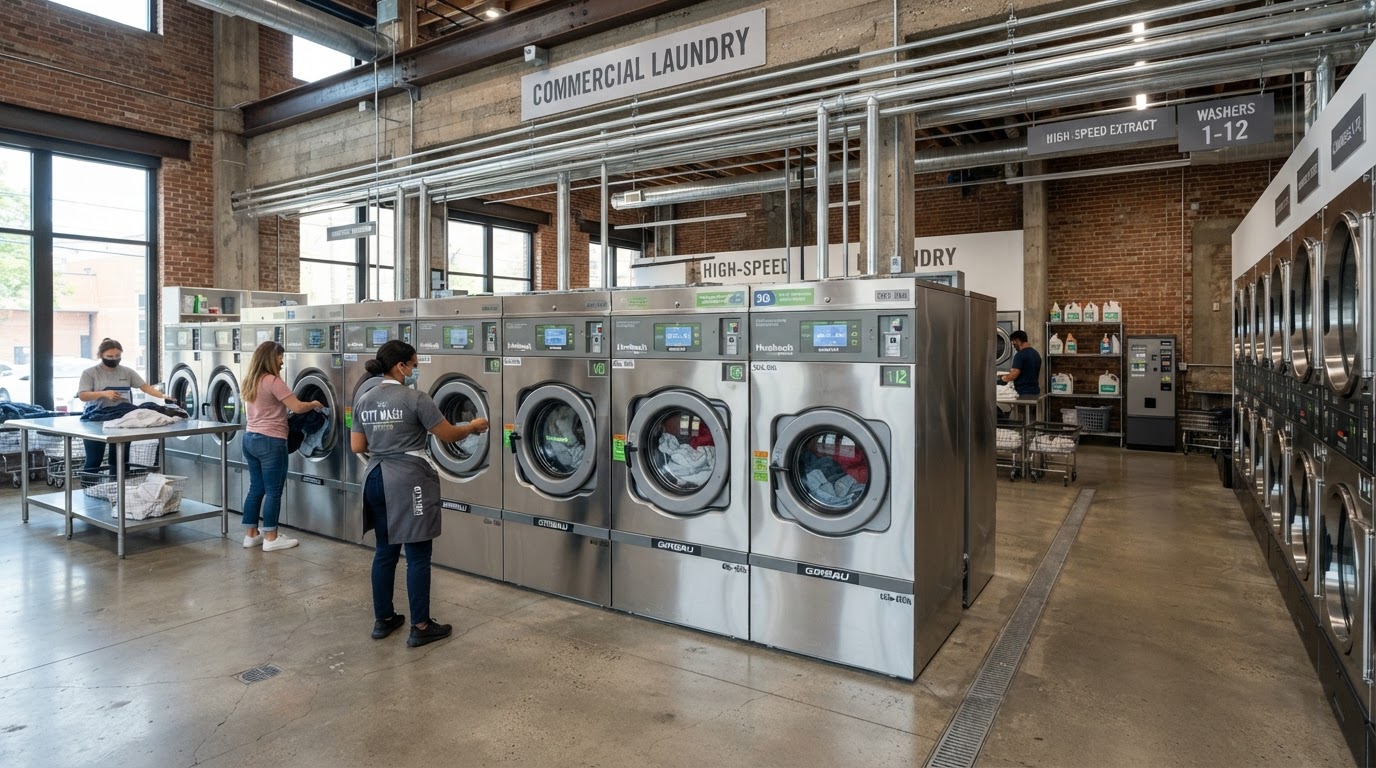
The strongest sanitization available without the color cost is ozone. Ozone is O3 — a form of oxygen that's a powerful oxidizer — and it kills bacteria in cold water where thermal sanitization would need 140°F. It's the technology our commercial machines inject, and it's what lets a healthcare worker sanitize scrubs without the hot-water fade. For a home wash, an ozone-generating washer is the option; for a commercial drop-off, our ozone-injecting cycles handle it.
The Sort and the Cross-Contamination
The single most important rule in scrub laundering is the sort: scrubs are a dedicated load, never mixed with household laundry. The bacterial load on a pair of scrubs after a clinical shift is real, and mixing that load with a child's towels or a partner's sheets transfers it across the household inventory. A dedicated load, with the scrubs turned inside-out and run through the sanitizing protocol above, keeps the clinical load on the clinical side of the laundry.
Frequently Asked Questions
Should I wash scrubs in hot or cold water?
Warm (105–120°F) is the compromise — hot enough to lift soil, cool enough to preserve the dye. The sanitization comes from an oxygen-bleach booster or ozone, not from the temperature.
Will bleach fade my scrubs?
Chlorine bleach, yes — it fades the dye and reacts with the fabric in a single wash. Oxygen bleach (sodium percarbonate) sanitizes without the fade; use oxygen.
Can I wash scrubs with my regular laundry?
No — a clinical load carries a bacterial load a household load doesn't. Run scrubs as a dedicated load to keep the clinical load separate.
How do I keep scrubs from fading?
Warm water (not hot), color-protecting detergent, inside-out in the wash, oxygen-bleach (not chlorine), and a hot dryer for the thermal finish. That protocol keeps a pair of scrubs clinical for two years.
The Bottom Line on Scrubs
Warm water, color-protecting enzyme detergent, oxygen-bleach booster, sorted separate from household laundry, inside-out in the wash, and a hot dryer for the thermal finish. Run that protocol and scrubs stay clinical and colored — and for healthcare workers who'd rather hand it off, our Drop Off Wash & Fold teams across Greensboro, Winston-Salem, and Burlington run ozone sanitizing cycles.
Did you find this guide helpful?
Give it a heart to help other readers discover it.
Need Professional Drop-Off Wash & Fold in Winston-Salem?
Bring your delicates, bulky comforters, or commercial linens to 658 S Stratford Rd. Open daily from 5 AM to 11 PM.
Reader Discussion (2)
This guide completely saved my favorite cashmere sweater! I had no idea standard detergent was destroying the fibers.
We visit the Stratford Rd location every weekend for wash & fold. The staff is always so attentive!