
How to Wash Silk Scarves and Silk Pillowcases Without the Water Spot or the Rings
Silk is a protein fiber that water can ring and heat can dull. A cool hand-wash, a flat air-dry, and a mild silk detergent keep the luster and the drape for years.

Elena Rostova
Sustainability Chemist
How to Wash Silk Scarves and Silk Pillowcases Without the Water Spot or the Rings
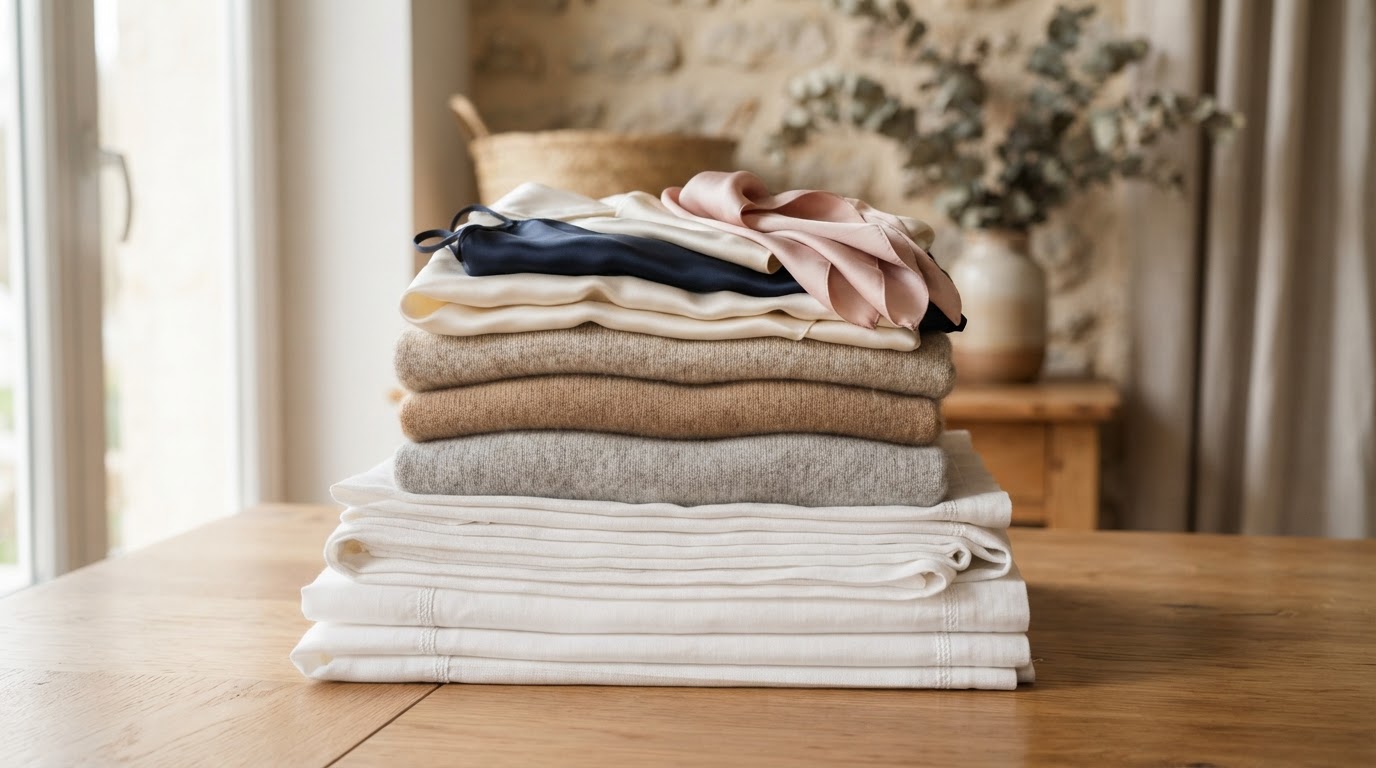
Silk is the fiber most people are afraid to wash, and the fear is half-right — silk is a delicate protein fiber, closer to human hair than to cotton, and the wrong wash rings it, dulls it, or shrinks it. But the fear lands most people on dry-cleaning a scarf or a pillowcase that would wash beautifully at home, because the right wash is gentle, cool, and short, not the hot, agitated, long cycle that ruins it. A silk scarf or a silk pillowcase hand-washed in cool water with a mild detergent, dried flat, and pressed on the lowest setting keeps its luster and its drape for years; the same piece dry-cleaned repeatedly goes flat and dry, and the same piece machine-washed hot comes out ringed, dull, and a size small. The protocol is the one that respects the protein fiber.
For silk pieces you would rather have professionally cleaned, our Winston-Salem Northwest Blvd drop-off team handles silk, or browse all four Royal Clean Locations.
Why Silk Is a Protein Fiber
Silk is a protein fiber — it is extruded by the silkworm as a continuous filament of the protein fibroin — and that is the key to washing it. Like human hair, silk is strong when dry and vulnerable when wet, and it is damaged by the same things that damage hair: heat, alkaline detergents, and agitation. The luster of silk comes from the smooth, prism-like surface of the fiber that refracts light, and a harsh wash roughens that surface and dulls the luster the way a harsh shampoo dulls hair. The drape comes from the fiber's natural suppleness, and a hot wash or a hot dryer shrinks and stiffens it. The right wash is the one that cleans the soil without roughening the surface or shrinking the fiber — cool, mild, short, and flat-dried.
The Detergent Question
The detergent matters more on silk than on almost any other fiber. A standard laundry detergent is alkaline, and alkalinity roughens the silk protein and dulls the luster over time; a pH-neutral or a silk-specific detergent is the right choice. A mild baby shampoo or a gentle silk wash (often pH-balanced and enzyme-free) is the home equivalent. Avoid enzyme detergents on silk — the enzymes that break down protein stains can, over repeated washes, break down the silk protein itself, which is why a silk wash is enzyme-free. A pinch of salt in the first few washes can help set the dye on a vividly colored scarf.
The Hand-Wash Protocol
The Press
Silk dries with a faint wrinkling that a press lifts. The rule: the lowest heat, and a press cloth. Iron the silk on the wrong side (the underside), or through a clean cotton cloth, on the silk or the lowest setting, while the silk is still slightly damp — a dry, hot iron glazes and shines the surface, and a too-hot iron scorches the protein the way a hot iron scorches hair. A handheld steamer is the safer tool, because the steam relaxes the fiber without the pressure that can shine or distort it. Steam the silk on a hanger and let it cool before folding.
The Pillowcase Specifics
A silk pillowcase is the silk piece most people wash most often, because it is the beauty piece — the smooth surface that reduces friction on skin and hair — and it carries the face's body oil nightly. Wash it on the same cool, mild, short protocol, every one to two weeks. The body oil is the soil to address, and a mild detergent in cool water lifts it without the alkalinity that dulls the silk over time. A silk pillowcase washed right lasts years; one washed hot with a standard detergent lasts a season and goes flat and dry.
The Things That Ruin Silk
Four moves ruin silk at home. Hot water, which shrinks and dulls it. An alkaline or an enzyme detergent, which roughens and weakens the protein over time. Wringing or twisting, which crushes permanent creases into the wet fiber. And a hot dryer, which shrinks and bakes the crease — silk never goes in the dryer. The ring that appears when a silk piece is spot-cleaned is water spreading the soil and the dye outward; the prevention is to clean the whole piece, not the spot, so the water line does not set a ring.
Frequently Asked Questions
Can I wash silk in the washing machine?
On a delicate or hand-wash cycle, in cool water, in a mesh bag, with a silk or pH-neutral detergent — yes, for sturdy silk pieces. For a fine or a vintage scarf, hand-wash.
What detergent is safe for silk?
A pH-neutral or a silk-specific detergent, or a mild baby shampoo. Avoid alkaline and enzyme detergents — the enzymes can break down the silk protein over time.
Why does my silk have water rings?
The spot was cleaned with water that spread the soil and the dye outward. Clean the whole piece in cool water so the water line does not set a ring; never spot-clean a visible area.
Can I put silk in the dryer?
No. The heat shrinks and bakes the crease. Roll in a towel to extract water and air-dry flat.
How do I iron silk without shining it?
On the lowest setting, from the wrong side or through a press cloth, while the silk is still slightly damp. A handheld steamer is the safer choice — it relaxes the fiber without the pressure that shines it.
The Bottom Line on Silk
Cool, mild, short, flat-dried, and pressed on the lowest heat. A silk wash is the opposite of a heavy wash — it respects the protein fiber the way you would treat fine hair — and for silk you would rather hand off, our Drop Off Wash & Fold teams across Greensboro, Winston-Salem, and Burlington handle silk.
Did you find this guide helpful?
Give it a heart to help other readers discover it.
Need Professional Drop-Off Wash & Fold in Winston-Salem?
Bring your delicates, bulky comforters, or commercial linens to 658 S Stratford Rd. Open daily from 5 AM to 11 PM.
Reader Discussion (2)
This guide completely saved my favorite cashmere sweater! I had no idea standard detergent was destroying the fibers.
We visit the Stratford Rd location every weekend for wash & fold. The staff is always so attentive!